
The Marq shows you
.jpg)
THE MARQ SHOWS YOU:
Past exhibitions
Come back to enjoy the magnificent exhibitions that have passed through our halls, and relive the cultural impact of great civilisations such as the Mayans, Vikings, Persians... It's a great experience!
Or our most beloved treasures expressed in exhibitions such as "Rupestre", "Cocentaina", "Petrer" or "Santa Pola" or "La Fragata de la Mercedes"...
What was shown in >> Petrer, archaeology and museum
Go back to >> see Guardians of Stone, Alicante's castles
See what we presented in 2011 >> Coins, all sides of the story
Enjoy again >> MAYAS, The enigma of the lost cities
Go back to >> see VIKINGOS, Warriors of the North Giants of the Sea
Exhibitions present
You can learn about history with the podcasts that make up the Marq's audio guides and visit the current temporary exhibition: "Idols, Millenary Glances".
Visit the virtual exhibition >> The Marq in Google Arts
Access the virtual tour >> The Marq in Tehran
Enjoy the video >> Roman Culture Hall
Future exhibitions
We tell you what will be happening in our halls in the near future. First class international exhibitions to enjoy after the confinement.
PAST EXHIBITIONS
PETRER
Archaeology and museum
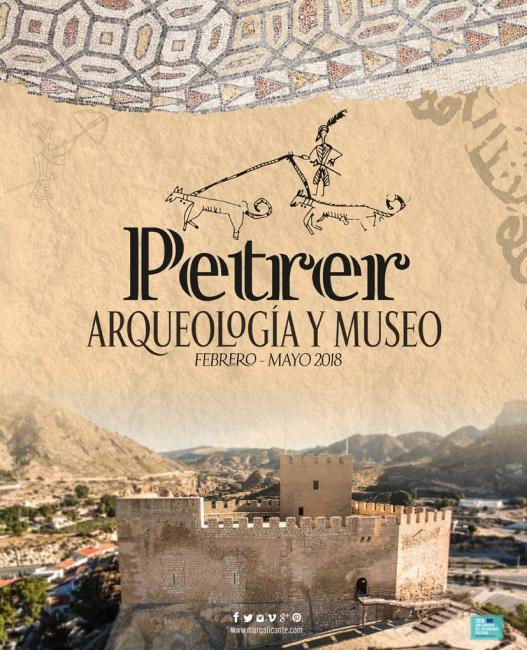
Petrer, Archaeology and Museum in MARQ
Hello to all of you!
Today I bring you a report on one of the temporary exhibitions that I have most enjoyed guiding, the exhibition organised by the MARQ in collaboration with the Dámaso Navarro Museum in Petrer in 2018. Petrer, Archaeology and Museum was the thirteenth proposal of the exhibition programme "Local and municipal museums in the MARQ". The exhibition aimed to bring the archaeological and heritage legacy (both material and immaterial) of this town in Medio Vinalopó closer to all visitors. It should also be noted that this was the first exhibition to have "Easy Reading" panels to help people with reading difficulties when visiting the exhibition.
The exhibition had a chronological route that went from Prehistory to the Civil War; in the final part of the exhibition there were also elements linked to the craft traditions of the town such as agriculture, pottery or footwear and a part of the second room was reserved to exhibit the intangible heritage, highlighting its festivals and traditions such as the Moors and Christians festivals, the "Carasses" or the Three Kings Cavalcade.
The first room of the exhibition was dedicated to Prehistory, the Ancient Age and part of the Middle Ages under Muslim domination. In the first section of the hall, archaeological remains from the Neolithic and the Metal Age from the main sites in the area, such as Chorrillo Chopo, l'Almorxó and Catí-Foradà, were exhibited. As far as the Iberian period is concerned, archaeological objects from the four Iberian settlements documented in these lands were exhibited. These sites were possibly linked to a much larger settlement in Elda, the Iberian city of Monastil. From the Roman period we have one of the most important remains found in the urban centre of Petrer, the mosaic of
Villa Petraria, which probably decorated a room in the Roman villa that functioned as a place of agricultural and industrial production until the Late Antique period. The final section of the first room was dedicated to the first period of the medieval period under Islamic domination, a key moment in the gestation of the town of Petrer, as the origin of this town is in the Islamic Bitrir which was settled on the southern slope of the hill of the castle of Peter. In the final part of this section there was a 3D model of the castle of Petrer under Islamic domination, ideal for the visitor to get an idea of the primitive appearance of this medieval fortress.
In the second room, we found archaeological objects from the medieval period under Christian domination as well as a model with a recreation of the castle with the reforms carried out by the new Christian settlers. In the Modern Age, the expulsion of the Moors in 1609 was a key event that brought with it important economic and mainly demographic consequences, as Petrer was depopulated and a Town Charter had to be drawn up to establish new settlers in the territory. Finally, one hundred people from other towns in the province of Alicante, such as Jijona, San Vicente, Castalla, Monforte, Agost and Biar, settled in Petrer. As far as the Contemporary Age is concerned, the historical event that the exhibition dealt with the most was the Civil War, as the Republican government (which was located in Valencia) moved to the Poblet estate (Petrer) and remained there until the end of the conflict. Among the exhibits, an anti-aircraft siren and photographs of an industrial footwear area called "La ciudad sin ley" (the lawless city) stand out, as it was transformed into an arms factory for the Republican side during the war.
As a museum guide, it is a pleasure and an honour to be able to learn more about the local heritage of the main towns in our region and to show visitors the incredible archaeological legacy that we have in the province of Alicante..jpg)
Carlos Pérez, MARQ guide
-------------------------back to >> menu
GUARDIANES DE PIEDRA, Alicante's castles
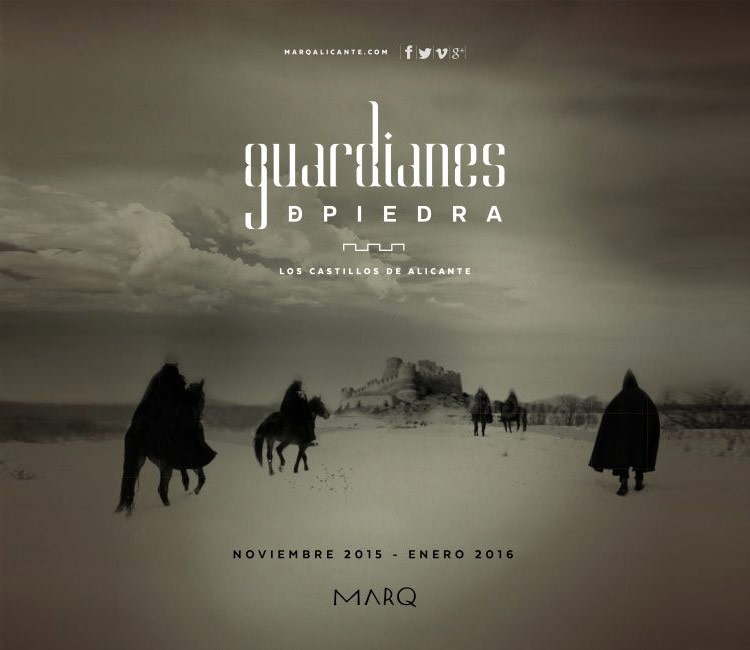
ALICANTE, LAND OF CASTLES
Hello to all of you!
Today I am going to talk to you about the castles of the province of Alicante and their importance from the point of view of heritage and tourism for our land. First of all, it should be noted that Alicante is a land of castles. The province boasts a list of more than 230 fortifications, including castles, coastal towers, inland towers, forts and batteries. The history and the frontier character of Alicante throughout the Middle Ages have meant that in these lands we find a large number of defensive structures that in their time were the stone guardians of this territory. In 2015, the MARQ organised a travelling exhibition dedicated to the castles of Alicante which proposed a route through the main fortresses of the area with the aim of bringing the historical and cultural heritage of these fortifications through a didactic route distributed along different routes according to the region and its historical evolution, an exhibition currently travelling in the Museum of History of the Villa de Monforte del Cid.
A model of fifteen of the most outstanding fortifications was set up specifically for the exhibition using the 3D printing technique. The itinerant nature of this project, which has been touring the main museums in the province, has made it possible to include more fortresses and castles on the model as the exhibition travelled around the main towns in Alicante.
The exhibition divides the castles of Alicante into five routes according to geographical and historical conditions:
Castles of Tudmir (Vega Baja): A fertile area of orchards where some of the oldest castles in our lands coexist, such as those of Callosa del Segura and Orihuela. There are also references to the defensive towers on the coast such as Cap Roig or La Mata.
Inland border castles (Vinalopó Corridor): The Crowns of Aragon and Castile had multiple fortifications to defend settlers and Muslims residing in this area, which have left some of the most spectacular examples of Almohad military architecture such as the castles of Villena, Sax or Biar.
Castles of the Clau del Regne (L'Alacantí): This is what the kings of the time called the region of L'Alacantí, where the city of Alicante stood as a fundamental strategic centre for the political interests of the time, thanks to its coastal location and its defensive points (the city walls and the Castle of Santa Bárbara).
Mountain castles (L'Alcoià and El Comtat): In this inland area, surrounded by mountains, sierras and valleys, large populations grew up linked to these rich and fertile lands. Among the defensive elements to be highlighted in this area, special mention should be made of Cocentaina Castle, built by its first Count, the admiral of the Crown of Aragon Roger de Llúria on top of the hill of San Cristóbal, the walls of the city of Alcoy or the Almohad Tower of Almudaina, which is currently managed by the MARQ since it completed the process of rehabilitation and musealisation, opening its doors to the public on 14 August 2018.
The castles of the border of fear (Marina Baixa and Marina Alta): Faced with the attacks and raids by corsairs from North Africa on the coast of Alicante, a kind of defensive wall was built based on watchtowers and city walls all along the coast of the northern regions of Alicante, with the Bombarda tower, the Gerro tower, the Portitxol tower and the Xarco tower standing out.
In short, the extremely high heritage value of these stone guardians, their deep-rooted connection with the citizens of Alicante and their attraction as a tourist attraction make them a cultural reference point of the first order in our lands. The presence of these castles for centuries has had a direct influence on the configuration of our current municipalities, so this exhibition offered us the opportunity to learn about the origin and evolution of the most important castles and fortresses in the province of Alicante.
Carlos Pérez, MARQ guide
.....
COINS, all sides of the story
THE COIN AS AN ARCHAEOLOGICAL DOCUMENT
Hello to all of you!
Today in #yomequedoencasaconelmarq I am going to talk to you about the evolution of coins throughout history, focusing mainly on the science of numismatics, the techniques for minting coins and their use in antiquity and the Middle Ages. It is worth mentioning that thanks to the MARQ's numismatic collections, a temporary exhibition was held in ROOM I of the museum entitled Coins, all the faces of history in which a journey through the history of the coin was made and its importance as an archaeological document was highlighted.
Currency is an object of universal diffusion that has reached the entire planet thanks to the passage of time, but in ancient times it was not always the only accepted unit of exchange, as other peoples chose other means of commercial transactions such as barter, which was used during much of prehistoric times and is still used today by some indigenous communities.
Closely related to the above, it should be noted that the discipline which deals with the study of coins is numismatics, a term which comes from the Greek nomisma. This discipline studies both the formal analysis of coins and the composition of the metals and alloys used in their manufacture. Coins provide us with a wealth of information from a historical and archaeological point of view, making them a key object for the analysis of a society at a given moment in history. Coins are also a key dating element if they are found in an archaeological site.
With regard to the manufacture of coins, it should be noted that the place where the coin is minted is called the mint; throughout history different techniques have been used to mint coins, for example in the Ancient and Middle Ages the hammer technique was used, but from the 16th century onwards presses began to be used. Nowadays mechanical presses are used, which are very effective in order to be able to mint a large quantity in a short period of time.
The Iberians were the first culture in our lands to use coins, due to oriental influence and the conflict that broke out in our territory between the Romans and the Carthaginians, the Iberian soldiers received coins as payment for their services in this conflict. Iberian coins usually depicted a male head on the obverse and a horseman on horseback carrying a spear on the reverse; these images were accompanied by inscriptions in Iberian script of the name of the city or tribe. One of the Iberian cities that minted coins in Alicante was Saetabi - Saitabi (Jávea). In the Iberian culture room we have different types of coins from this period, as well as an image with a recreation of a mint from this period.
After Rome's victory over Carthage in our territory, the Iberian Peninsula was gradually incorporated into the Roman world through Romanisation. During this period, the only Roman city in the province of Alicante that minted coins was the Roman colony of Ilici (l'Alcudia, Elche). Many of the coins minted at this Ilici mint are on display in the Roman culture room of the permanent exhibition. On Roman coins, the portrait of the emperor normally presided over the obverse, while an image of the city issuing the coin covered the reverse. The Roman monetary system was complex and there were many types of coins of different metals (mainly gold, silver and bronze). Some of the best known were the Aureus (gold coin, used for the most important transactions), the Denarius (silver coin equivalent to 10 bronze aces), the Sestertius (four sestertii were equivalent to one denarius) and the Ace (bronze coin which became less common after the crisis of the 3rd century).
Already in medieval times, under Islamic rule, the gold dinar and the silver dirham were the most widely used coins for trade in the Levant. For religious reasons, these coins did not have figurative representations, so the Arabic-language legends occupied the entire surface of the coin. After the Christian conquest of the territory of Alicante, the first coins used were minted in Aragon and Catalonia, but James I granted the Kingdom of Valencia the privilege of having its own coinage in 1247, so little by little the new Kingdom of Valencia acquired its own monetary system. After the union of the two Crowns (Castile and Aragon), the use of coins from the Kingdom of Valencia and Castilian coins began to alternate. In the area of the pre-apse of the Middle Ages room we can see many examples of coins used, both in the Islamic and Christian periods, in our lands.
In short, and by way of conclusion, thanks to coins, historical, economic, artistic and chronological knowledge can be extracted, making their study essential for anyone who wishes to learn about the past.
In the following link I leave you the PDF of the didactic guide published by the museum about its exhibition Coins, all the faces of history (Click on the image to download). I hope you enjoy it!
Carlos Pérez Soler. MARQ Guide
.......
MAYAS, The enigma of the lost cities
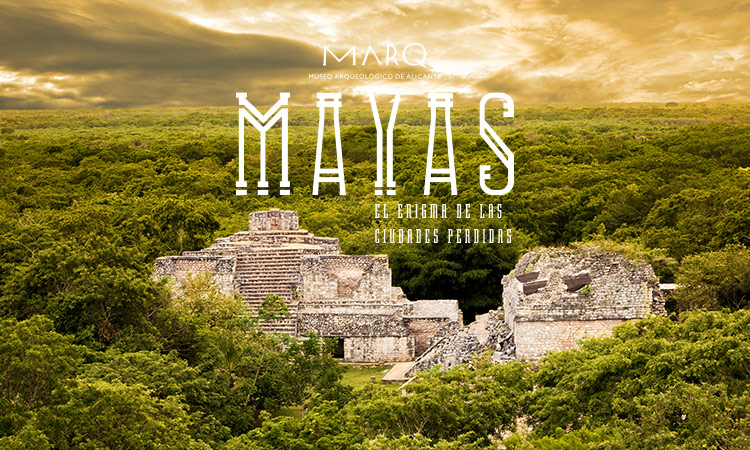
Immerse yourself in the jungle, cradle of the Mayan culture.
The immense temples and palaces appear there. As silent witnesses of a lost civilisation, the cities still hold many unsolved mysteries within their walls. The Maya inhabited the Yucatan Peninsula. Their culture developed in a territory that has its centre in Guatemala and extends into Belize, and parts of Mexico, El Salvador and Honduras. It reached its maximum development during the first millennium B.C., when the kings became divinities and ruled cities such as Tikal, Palenque, Copán or Calakmul.
We invite you to learn more about this exciting civilisation...
..................................... >> Back to top
VIKINGOS, Warriors of the North, Giants of the Sea
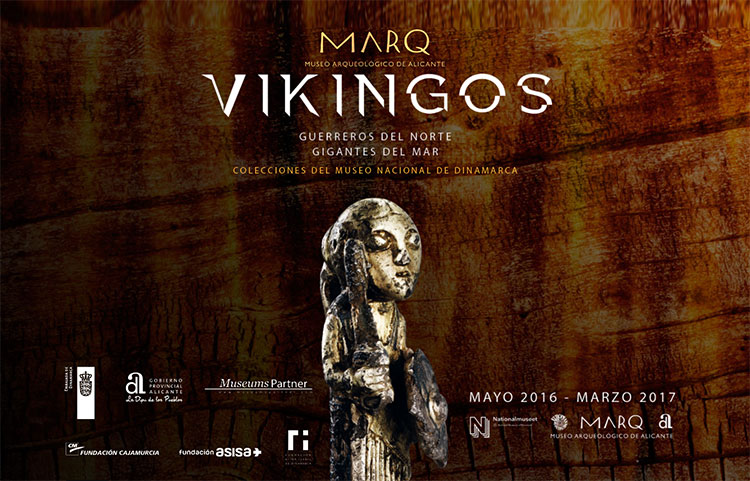
WELCOME TO THE UNIQUE AND FASCINATING WORLD OF THE VIKINGS.
On 8 June 793 the Anglo-Saxon Chronicle recorded the first Viking plunder at the monastery of Lindisfarne, off the coast of England. The Viking Age began.
Runestones are practically the only written example we have of the Vikings; they were a society that passed on all their knowledge and wisdom from generation to generation orally.
We invite you to learn more about this exciting civilisation...
..................................... >> Back to top
EXHIBITIONS PRESENT
.....
THE MARQ IN GOOGLE ARTS
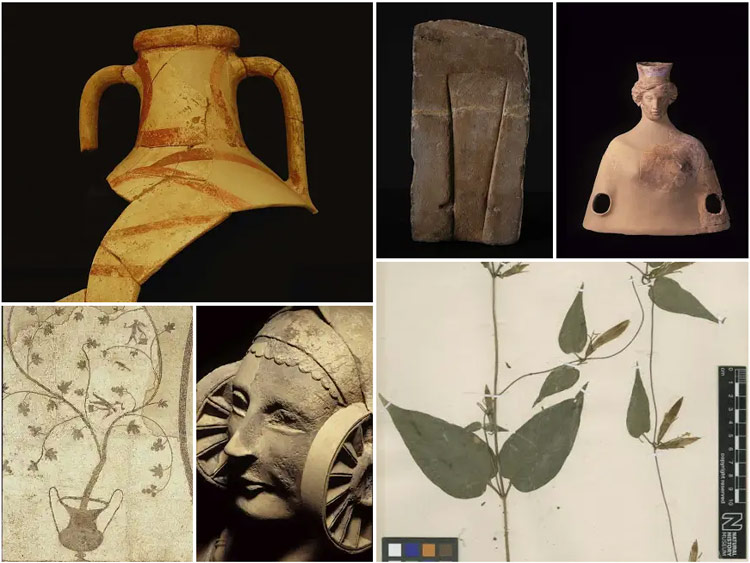
Through the Google Arts & Culture project, the computer giant has been offering for years an extraordinary cultural experience, offering the possibility of exploring more than 4,500 museums through a resource very similar to Google Street View. Users can virtually visit museums all over the world, viewing 360° views of places that are now inaccessible, not only because of distance and cost, but also because of the current state of confinement due to the international crisis caused by COVID-19.
There are exactly 4,694 museums available to visit virtually that were visited and registered by the Google team. The tool allows you to search by the name of the museum, the artist or the work of art you are interested in. The descriptions come with details about the date and materials used in the artwork. The platform can be used these days as a support for teachers because it also has historical information about cultural movements and documents related to museums.
Today we bring it to you here, to remind you of the incorporation of MARQ to the Project in October 2012, opening it also, since then, to users from all over the planet.
The Archaeological Museum of Alicante, MARQ, has 80 pieces on the platform, including a fragment of a bronze hand found in the forum of the Roman city of Lucentum (Alicante), the head of a mythical animal in stone, a small terracotta representing a Carthaginian warship (birreme), a decorated gold plate from the end of prehistoric times, a collection of Islamic bronzes and popular Alicante art on ceramics.
As the director of the MARQ, Manuel Olcina, declared in October 2012 on the occasion of this incorporation to Google Arts & Culture, "this selection of pieces shows the rich archaeological and historical heritage of the lands that today form the Province of Alicante, they are testimonies of human activity, its achievements, its ideas and its cultural universe from prehistoric times to the present day".
Likewise, at the same time that the incorporation of the MARQ to the aforementioned project was announced, the Managing Director of its Foundation, Josep Albert Cortés, declared: "the MARQ offers from today the possibility of bringing Alicante to the world and vice versa at the click of a button, also through Google Art and Culture, opening the Alicante museum not only to all Internet users but to all those people who can visit our Costa Blanca and enjoy the cultural offer that the MARQ and its archaeological sites have to offer".
But the user can also:
- Browse the contents by artist name, artwork, art type, museum, country, collections and period.
- Take a tour inside the museums from the project website.
- Discovering overlooked details of the works or pieces that the human eye alone cannot perceive.
- Create your own collection
.........
THE MARQ IN TEHRAN
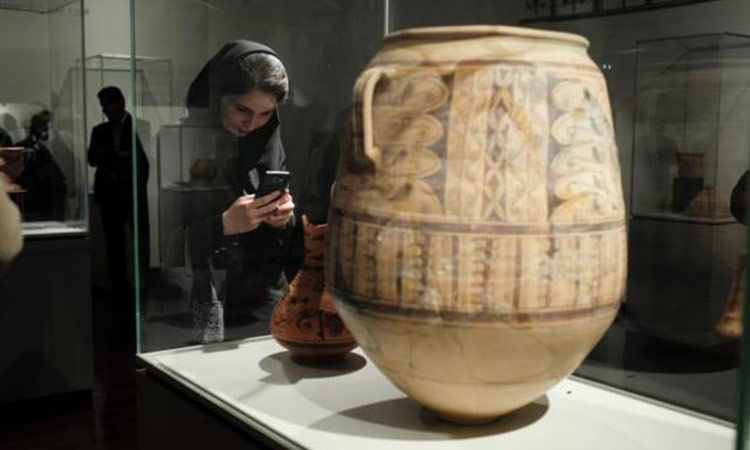
GET TO KNOW THE MARQ EXHIBITION IN TEHRAN
Since this week, MARQ has been sharing virtual tours of its exhibition at the MNI headquarters in Tehran, with commentaries by archaeologists and specialists from the Iranian museum, accessible to the Middle Eastern public in the original version in Farsi. This week they are also being translated into Spanish to include subtitles on the exhibition's channel 'Iran.
.........
ROMAN CULTURE ROOM
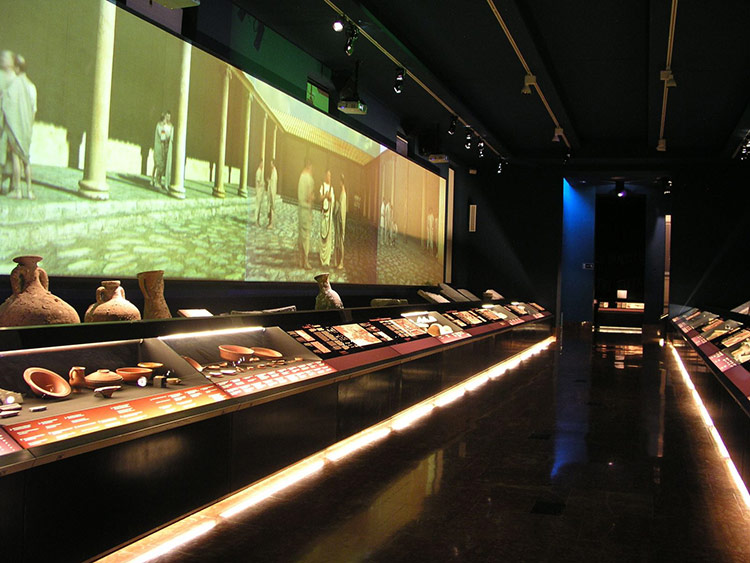
Enjoy the video presentation of the hall
Roman Culture Hall from MARQ Archaeological Museum of Alicante on Vimeo.
..................................... >> Back to top