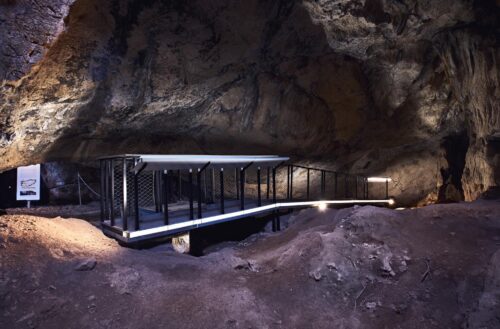
El museo de sitio del yacimiento neolítico de la Cova de l'Or in Beniarrés y su centro de interpretación cerrarán la temporada de visitas al público el próximo domingo 29 de noviembre, prorrogando así en tres fines de semana el cierre previsto inicialmente.
The CV MARQ Foundation gestiona, en colaboración con el Beniarrés Town Council, esta propuesta, que ofrece al visitante un recorrido completo tanto por el Centro de Interpretación como por el propio enclave. Según ha explicado el diputado de Cultura, Juan de Dios Navarro, "se trata de un cierre programado, tanto durante la temporada de verano como en la de invierno, con el objetivo de hacer frente a las temperaturas extremas”. La reapertura está prevista para el fin de semana del 20 y 21 de marzo de 2027.
The Cova de L'Or is one of the most important archaeological sites of the Neolithic period on the Iberian Peninsula, and has been declared an archaeological site of the Bien de Interés Cultural. Desde hace más de tres años recibe grupos organizados de visitas guiadas que culminan en la cueva un interesante recorrido de interés cultural y paisajístico que se inicia en el centro de interpretación, ubicado en el núcleo urbano de Beniarrés. Cerca de cuatro mil personas have already enjoyed this heritage and nature itinerary de primer nivel que se ha convertido en un importante referente histórico.
Estas visitas se realizan los sábados y domingos, a las 9:00 y 11:30 horas, con el punto de encuentro en el centro de interpretación desde donde un minibús traslada a los visitantes hasta el inicio del sendero que conduce al yacimiento. El aforo máximo es de 15 personas por pase con el objetivo de preservar el valor del legado histórico y patrimonial del yacimiento arqueológico convertido en Museo de Sitio. No está autorizada la visita libre.
Durante este año las visitas a la Cova de L’Or finalizarán los días 28 y 29 de noviembre, con la posibilidad de adquirir entradas a través de la página web para aquellos que aún quieran realizar la visita. Más información y reservas en www.marqalicante.com.
The Cova de l'Or de Beniarrés is located 675 metres above sea level, on the southern slope of the group of reliefs that make up the Benicadell mountain range. It contains an archaeological site of enormous importance for the knowledge and research of the Neolithic of the Mediterranean coast of the Iberian Peninsula. The quality and significance of the archaeological material found in the excavations carried out since the 1930s suggest that the cave was a place of social reference for settlers of Mediterranean origin who, at the time of the excavations, had been living in the area. mid-6th millennium BCintroduced in these valleys the practice of the agriculture and livestock farming.
In the Cova de l'Or, material elements have been found that bear witness to the importance of the occupation in the Early Neolithic (5500-5000 B.C.)The enclave was an ideal place for habitation. It is to this historical period that the wheat and barley seed accumulationsThe pottery is also found in the interior, as well as the ceramics printed with shells, especially those decorated with human figures with their arms raised, alone in a praying position or in a group evoking a dance.
The symbolism of this pottery is defined within the movable aspect of the Macroschematic ArtThis links the cave to the Rock Art sanctuaries of that chronology, such as La Sarga (Alcoy) or Pla de Petracos (Castell de Castells), and the Cova de l'Or may have been part of some kind of ritual cycle linked to these meeting and gathering places.