
- The deputy for Culture visits the enclave to learn in detail about the discovery of the first evidence of the existence of buildings for domestic use in the area.
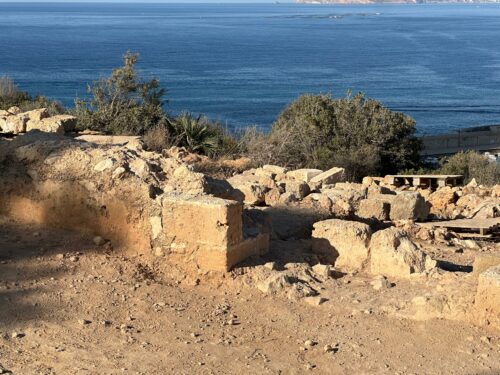
The work carried out in La Pobla d'Ifac this summer on the occasion of the the 20th Excavation Campaign of the Archaeological Museum of Alicante have identified remains of two large buildingswhich represent the first proof of existence of dwellings of the inhabitants of Ifach during the 14th century.
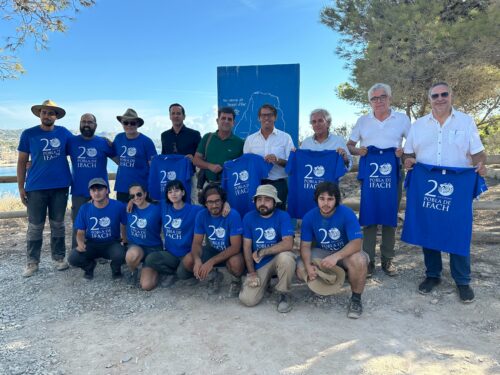
The Deputy for Culture, Juan de Dios NavarroThis morning he visited the archaeological site, located on the slopes of the Peñón de Ifach Natural Park, to see the discovery first hand. "This is a great discovery that reaffirms the category of this archaeological site as a reference in medieval research and for the Diputación it is a great satisfaction to support this campaign, in this case through a project in which more than one million euros have already been invested over two decades of collaboration with the Calpino town council."The deputy added.
During these twenty years, and with the support of more than 350 volunteers from Valencian, national and European universities, the team has been discovering an important walled enclosure, equipped with two monumental gates, and the domus dominiwhere the House of Llúria, a feudal family that controlled the territory of Calp in the 14th century, exercised power. Likewise, the church Beata Santa María de Ifacha construction promoted by Margarita de Llúria y Entenzadaughter of the admiral Roger de Llúria and Saurina de Entenza.
Accompanied by the regional secretary for the Environment and Territory, Raúl Méridathe first deputy mayor of Calpe, Juan Manuel del Pinothe provincial deputy Arturo Poquet and by the director of MARQ and coordinator of the Campaign, Manuel OlcinaNavarro toured the enclave where a team of professionals and volunteers has been working for the past four weeks under the direction of José Luis Menéndezspecialist in medieval archaeology and exhibition technician at the Alicante museum.
"The preservation and enhancement of this enclave is one of the priorities of this institution, which is working to achieve its future museumisation and thus complete the environmental and cultural offer offered by the Peñón de Ifach."said the deputy who, like del Pino, thanked the volunteers for their work.
In addition to the important discovery of the dwellings, rectangular in plan and built in masonry with chained ashlar masonry at the corners, the MARQ team has continued with the excavation works of the shed outside the city walls and whose floor plan continues to increase, with a length of more than 18 metres. On the other hand, as part of the preventive conservation programme carried out at the site, the removal of a large part of the debris generated during the blasting of the Hotel Palace Ifach.