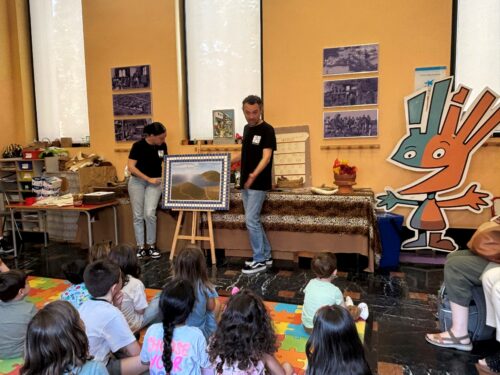
The 'Veranea 2025' campaign took place in July and August with workshops, games, guided visits to exhibitions and other cultural activities.
The summer activities campaign in the Archaeological Museum of Alicante has concluded its 21st edition with a "full house" after the participation of 360 children aged between 6 and 12 years old.
Promoted from the CV MARQ FoundationThrough its Didactics Unit and the Llumiq Club, MARQ's Summer School has offered throughout this summer, to a maximum of 45 children enrolled per week, a leisure and culture campaign which has been extended throughout July and August. As explained by the deputy for Culture, Juan de Dios NavarroDuring this period, workshops, games, activities, gyncanas, quizzes and guided tours have been carried out.which have served to showcase the history of the ancient city of Alicante through the temporary exhibition 'Cities of Light. Ákra Leuké, Lucentum, Laqant'".
Veranea en el MARQ, which opened on 30 June and closed on 22 August, has developed its activities in the following years. gardens of the museum, as well as in its permanent and temporary galleries.. Proposals such as outdoor games, viewing of all the exhibition audiovisuals - both in the rooms themselves and in the didactic classrooms - and visits to the temporary and permanent rooms of the museum were some of the activities carried out. The youngest visitors were also able to enjoy gymkhanas, as well as different workshops: making cloth bags, laurel wreaths, armour and scutumamong others.
In this 21st edition, the Didactics team of the MARQ Foundation has set itself the following goals to transmit the contents of the museum in a complete and entertaining way. and, on this occasion, discover in the temporary exhibition 'Cities of Light' the ancient history of the city of Alicante, from the most remote past to its medieval origins, identify the different names it has had in the course of its history and relate them to its different cultures or locate temporally and geographically the different historical settlements.
Navarro highlighted these priorities ".which facilitate access to culture for the youngest members of the household, enable them to recognise the role of archaeology as a vehicle for historical knowledge, to value and protect historical, cultural, environmental and archaeological heritage, and to learn how to visit a cultural institution with respect and make the most of it, encouraging teamwork and cooperation between colleagues.".