The Alicante Provincial Council presented today in Madrid the Etruscans. The dawn of Rome'.a international exhibition which will be shown for the first time at the MARQ a global overview of one of the great Mediterranean civilisations of antiquity. Organised in collaboration with two leading museums in ItalyThe exhibition will be inaugurated next 26 August and can be visited until 12 December.
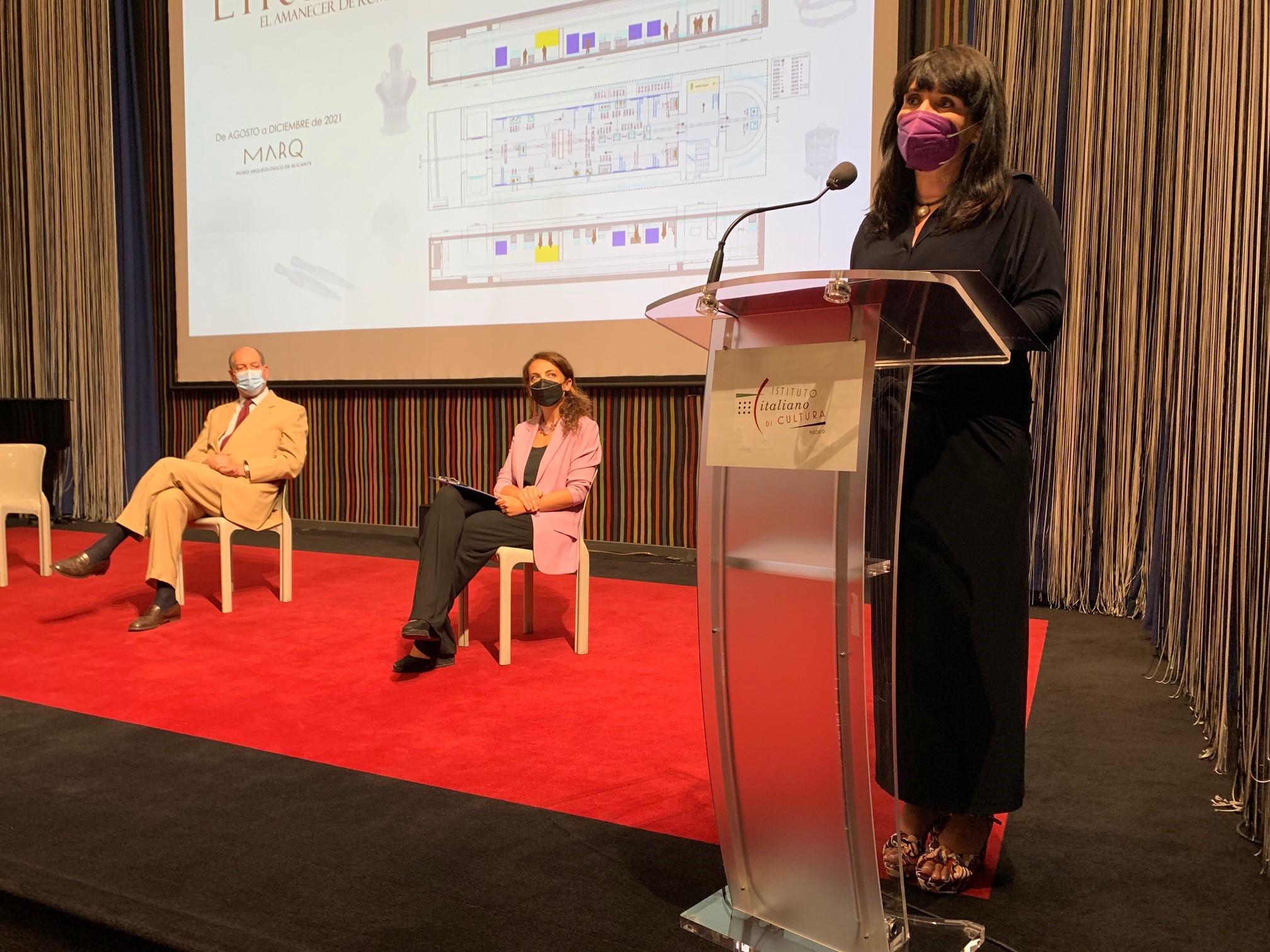
The Vice-President and Member of Parliament for Culture, Julia Parrapresided over the event, which took place at the Istituto Italiano di Cultura in Madrid, together with the Ambassador of the Republic of Italy in Spain, Riccardo Guarigliathe director of MARQ, Manuel OlcinaThe director of the Istituto Italiano di Cultura in Spain, Marialuisa Pappalardoand the curator of the project, Giuseppina Carlotta Cianferoni. The event was also attended by the managing director of MARQ, José Alberto Cortés.
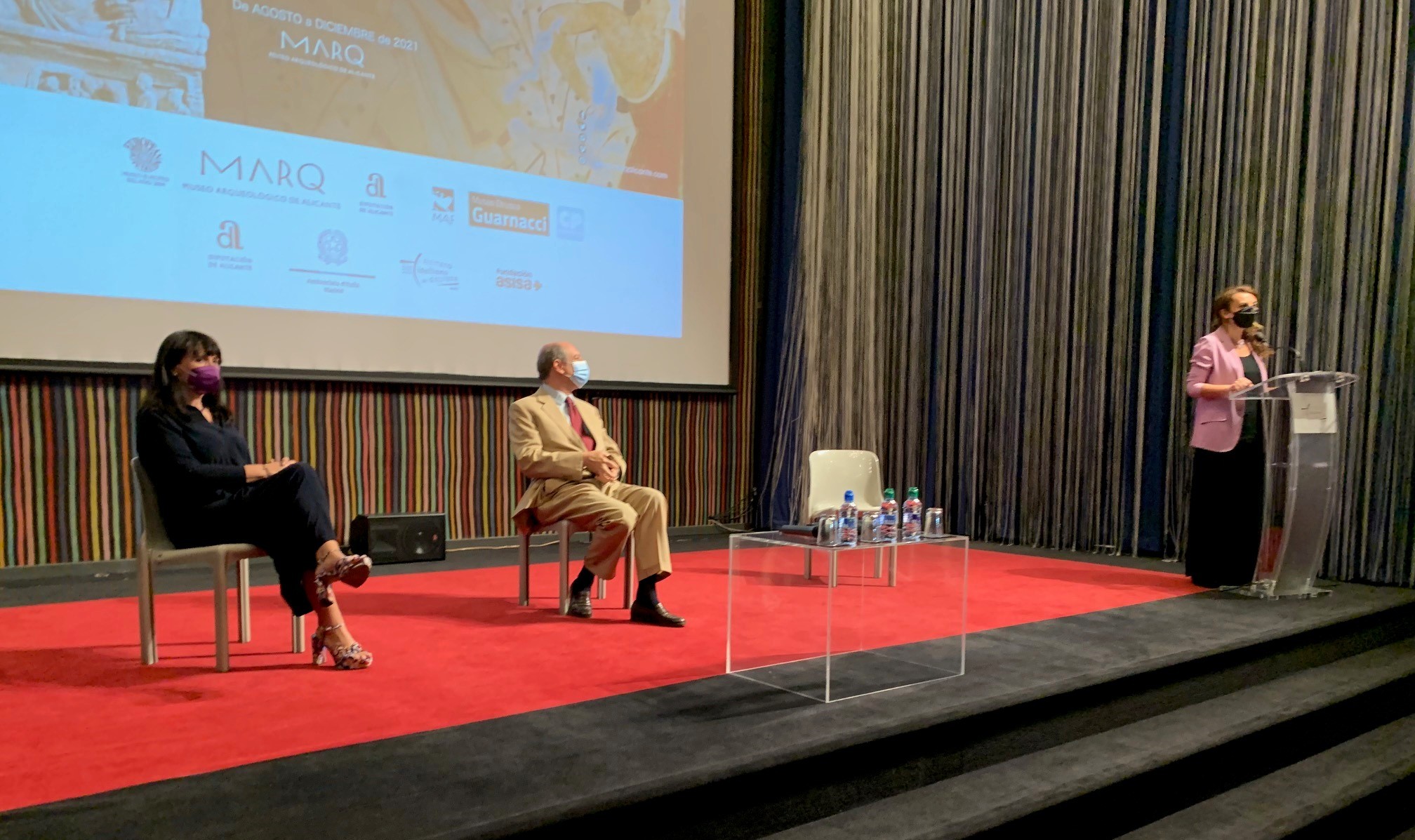
Julia Parra has expressed the importance and uniqueness of the exhibition that will become a reality next month. "After all the setbacks and uncertainties associated with these times of pandemic, Alicante deserved to bid farewell to the year with an exhibition of the highest level in the MARQ, from where a window will open to the world to enjoy a unique and unprecedented opportunity in Spain," she said.
The Italian Ambassador confirmed his satisfaction "to have an Italian exhibition in Alicante because there are ties that unite the two peoples". With this exhibition, Guariglia hopes that "the Italian-Spanish voice will be even stronger, taking it to the whole of Europe". He also defended the influence of the Etruscans as a fundamental people in today's culture of which "we are heirs and, therefore, debtors".
The proposal comes from the hand of the MARQ Foundation and the Soprintendenza per i Beni Archeologici della Provincia di Pisa e Livorno and will include the exhibition of 150 original pieces from the Museo Archeologico Nazionale di Firenze (National Archaeological Museum of Florence) (MAF) and the Museo Guarnacci di Volterraone of the oldest in Italy, founded in 1761. Through a museum tour of their culture, social, political and urban structure, 'Etruscans. The Dawn of Rome' will show the history of this civilisation from its origins in the 9th century BC until its gradual absorption by Rome in the 1st century BC.
The curator of the Italian exhibition emphasised that the exhibition includes a selection of works representative of the two most important Etruscan museums in the world. Cianferoni explained that his challenge "is to provide a general picture of the culture and customs of the Etruscan people and to show their role in the Mediterranean and the unique legacy they have left to the Romans".
The exhibits, which come from 37 sites in ancient Etruria, cover the entire material record of this culture, with the most outstanding volume being the funerary urns, stelae and reliefs with works such as the Urn of Ulysses and the Sirens from the Museum of Volterra, the canopic jar from Chiusi, a funerary stele from Florence, the urn of the Rape of Proserpina from Volterra and the male sarcophagus from the necropolis of Rosavecchia in Tuscania.
It will also be possible to admire objects made of gold -such as the diadem from Orbetello or bracelets from the necropolis of Bisenzio and the tumulus of Pietrera in Vetulonia-, metal objects -such as the cauldron from the necropolis of Crocefisso del Tufo- or bronze statuesAmong them, a group of sites from Fermo and Fiésole. In addition, 'Etruscans' also features relevant armament parts and ceramic material.
Julia Parra thanked all the organisations involved for their work and valued "the role that culture has once again played as an extraordinary means of understanding, dialogue and collaboration between countries and institutions". The vice-president also highlighted the international character and the tourist attraction of the exhibition, which is included in a wide-ranging, varied and high-quality cultural programme, which is "a fundamental part of the Costa Blanca's presentation poster".
Aimed at all audiences, this great proposal will have an interesting graphic and didactic supportwhich includes audiovisual projections and interactive tools. All this, together with reconstructions and immersive environmentswill transport the visitor to the daily life of this village through its customs, traditions, artistic practices and religious beliefs.
The director of the MARQ, for his part, emphasised that 'Etruscos' is a unpublished exhibition which is being exhibited for the first time in the Alicante museum and he pointed out that, at the same time, materials from this culture found in sites in the province of Alicante. "In total, around twenty pieces that make up the exhibition 'Etruscan Traces in Alicante' and highlight the importance of the acquisition of objects related to the consumption and preparation of wine in the Iberian world", Olcina pointed out. This collection will incorporate a explanatory catalogue The exhibition will include an audiovisual presentation and an illustration showing the use of Etruscan artefacts.