
marq
The MARQ is an institution whose functions and legal personality are structured in two large blocks with precise competencies and purposes: the Archaeological Museum (created in 1932) and the Foundation of the Valencian Community-MARQ (constituted in 2001), although complementary and convergent, working to consolidate and expand the museum's capacities. A joint task whose ultimate aim is to offer society "...".a museum for all"The aim is to make scientific rigour accessible to the diverse capacities of the visiting public through a wide-ranging programme of dissemination and activities. A quality work that has been validated and recognised on several occasions. The United Kingdom, by meeting the exacting standards of the British MuseumIn 2007, the MARQ was authorised to house and exhibit any collection of art or archaeology from this nation. In the 21st century, the MARQ has received significant local, national and international recognition, including the award EMYA 2004The European Museum of the Year, awarded by the European Museum Forumand maintains its appearance at the top of the reference lists of museums and cultural assets to visit in Alicante and Spain.
ARCHAEOLOGICAL MUSEUM OF ALICANTE-MARQ
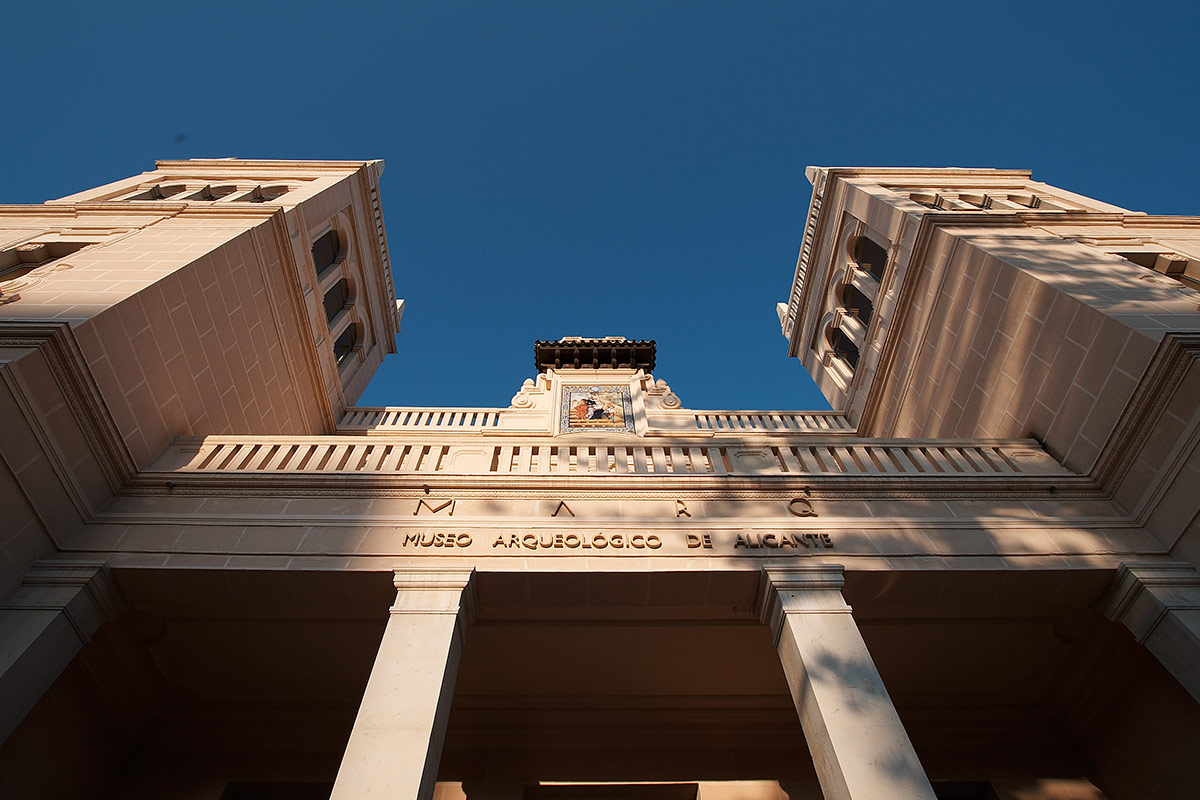
The Archaeological Museum of Alicante-MARQ is an institution that was born, on the day of its official inauguration in 1932of the sensitivity of Alicante society in the preservation and knowledge of its cultural heritage, at the initiative and encouragement of the Provincial Corporation and the Provincial Monuments Commission. At 1965 was incorporated into the network of provincial museums under agreement with the Ministry of Culture, and for the first time the post of Director was filled through a national competition, won by E. Llobregat Conesa. It was in 1994The museum will be officially recognised as the Provincial Archaeological Museum of Alicante with the transfer of powers in the field of culture to the Valencian Autonomous Government, when it obtains the official recognition that it currently holds as the Provincial Archaeological Museum of Alicante.
Since its creation, the museum has come a long way in adapting to the cultural demands of society until, around the turn of the millennium, it underwent a complete transformation. The transfer of headquarters (effective from 2000 and officially inaugurated by H. M. Queen Sofia of Spain, in 2002) from the ground floor of the Provincial Palace to the architectural complex of the San Juan de Dios Provincial Hospital (from a mere 300 m² to the 9,200 m² of the new building), provided it with sufficient space to house the public areaspermanent and temporary exhibition rooms, library, didactic workshops, shop, cafeteria-BARQ, etc., as well as the technical areasThe areas of incoming and outgoing goods, inventory and cataloguing, restoration, storerooms, archives, administration, etc.
The museum is a administrative unit of the Provincial Councilwhich is attached to the Area of Culture, which has its own funds for the development of its activities, and which constitutes the bulk of the specialised technical staffcoordinated by the Technical Directorwho are responsible for the responsibility for the quality and scientific rigour of the conservation, research and dissemination of Alicante's archaeological heritage. Since 2006, the Museum has undergone regular quality inspections of its Management System, both internal and external, which certify its qualification as compliant with the requirements of the European Standard ISO 9001:2008. The Management System applies to the services of promotion, conservation, research, exhibition and dissemination of the collections deposited in the Museum and the Historical and Archaeological Heritage of the Province of Alicante.
STRUCTURE OF THE MUSEUM
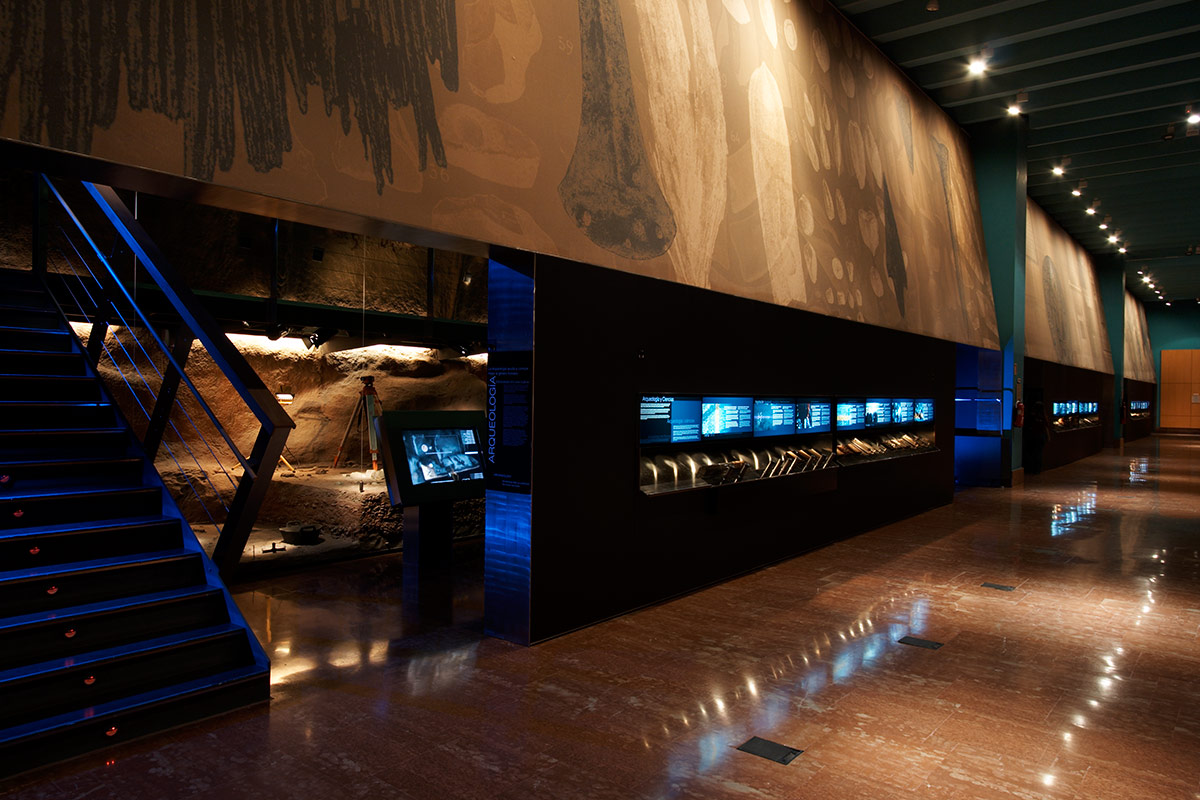
The museum is divided into large Units functional, in charge of which is the figure of a Head of Unitwhich is coordinated by the Technical Directorate of the museum. Each Unit is organised into several Departments with specific functions, although the entire technical team collaborates in the assumption of other transversal tasks necessary for the conservation, study and enhancement of the collection, attention to researchers and dissemination.
The Collections and Excavations Unit It is responsible for the management, conservation and cataloguing of the archaeological and documentary collections, and scientific research in the Archaeological Parks. This unit is made up of different departments with specific functions: the department of Revenues and Outflowsthe Cabinet of Collections and Researchers (a space for cataloguing and where since 2007 there has been an exhibition of 9,000 pieces available to researchers, teachers and students of archaeology), the Numismatic Cabinet (with more than 8,000 pieces), the Restoration Laboratory and the Technical Archive. The facilities of this unit are concentrated on the basement floorfor some time nowaccessible, by prior arrangement, to the visiting public.
The Exhibitions and Dissemination Unit assumes the technical production of the exhibitions and the edition of the magazine MARQ, Archaeology and Museumsthe scientific publications The museum's collection, which includes several series, and the exhibition catalogues. The Library The museum's collection is managed by this unit (with almost 40,000 volumes and exchanges with 397 national and foreign institutions). The unit is also responsible for ensuring the scientific rigour of the museum's educational productions.
The Innovation and New Technologies Unit has been in operation since 2009 to deal with the updating and improvement of MARQ's on-line resourcesin particular the page webThe Museum is also in charge of the Museum and the Foundation. It is also responsible for facilitating accessibility of the visitor through the new communication technologies (open WiFi network, information system accessible by means of smartphones or tablets provided by the Museum, information stored in QR Codes, etc.).
The Administrative UnitAmong other functions, it prepares all the necessary economic-administrative documentation for the annual budget, investments and running costs, as well as the deposit, transfer and acquisition of movable archaeological and other heritage property held by the museum.
MUSEUM ACTIVITIES
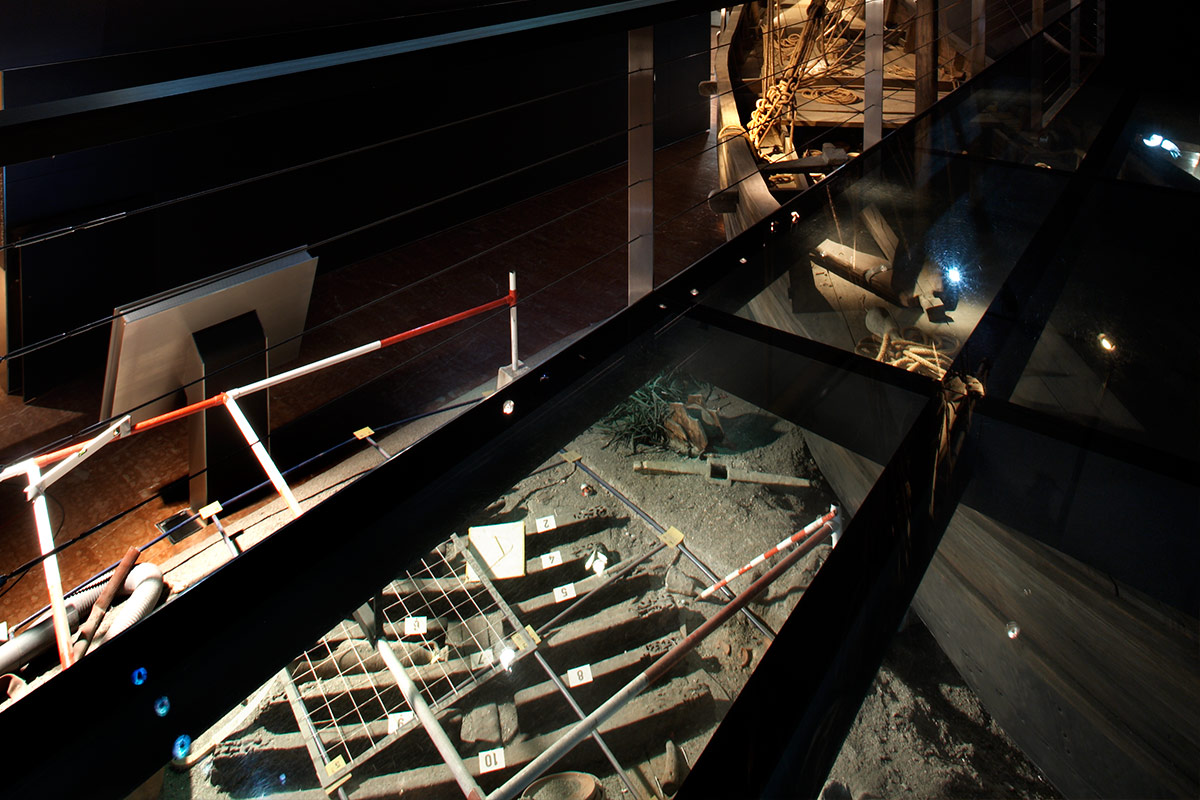
The museum performs many functions and tasks. Particularly noteworthy is the promotion, conservation and research of its collectionandof Alicante's archaeological heritage. It also carries out scientific research and preservation projects at archaeological sites in different parts of the province through the Annual excavation plan. At cooperation with the Architecture Department of the Provincial Council and the CV MARQ Foundationthe museum works for the recovery, research, musealisation and dissemination of the archaeological parks del Tossal de Manises/LucentumLa Illeta dels Banyets in El Campello and the prehistoric sanctuary of Pla De Petracos (Castell de Castells).
Another highlight of the museum's activities is theprogramme of temporary exhibitions of the MARQ, which is generally developed under the sponsorship of the Foundation, with the aim of to facilitate visitor access and enjoyment not only to its collection but to emblematic archaeological collections in the provincial, national and international archaeological scene.. These exhibitions deal with relevant themes for a better understanding of the past of Humanity, trying, when possible, to complement them with exhibitions that connect it with the Iberian Peninsula and our lands. Special mention should also be made of three temporary exhibition programmes that disseminate the Archaeology of Alicante and its own collection: Municipal museums in the MARQ, Exhibitions at the MARQ Foyer (on an outstanding archaeological piece) and the Book Corner (presenting a relevant bibliographic piece).
Its functions also include the dissemination of scientific research that contextualises the collection and other museographic activities. To this end, the museum organises, promotes and assists with the holding of scientific meetingsIt also organises cycles and conferences to disseminate scientific knowledge that complement its research and exhibition work, and publishes numerous publications and archaeology in Alicante.
In addition, the museum carries out a continuous assistance to researchersThe Centre also collaborates with other centres in the study of materials and bibliographic research. training of professionalsThe Foundation offers students and graduates its experience in conservation, research and dissemination of heritage through training courses and internships (among which the following stand out on Master's Degree in Professional Archaeology and Integral Heritage Managementof the University of Alicante). To this commitment, the annual call for 8 training grants at Restoration of Archaeological Heritage, Conservation and Restoration and Library science.