

Hiking in the Cava of Agres
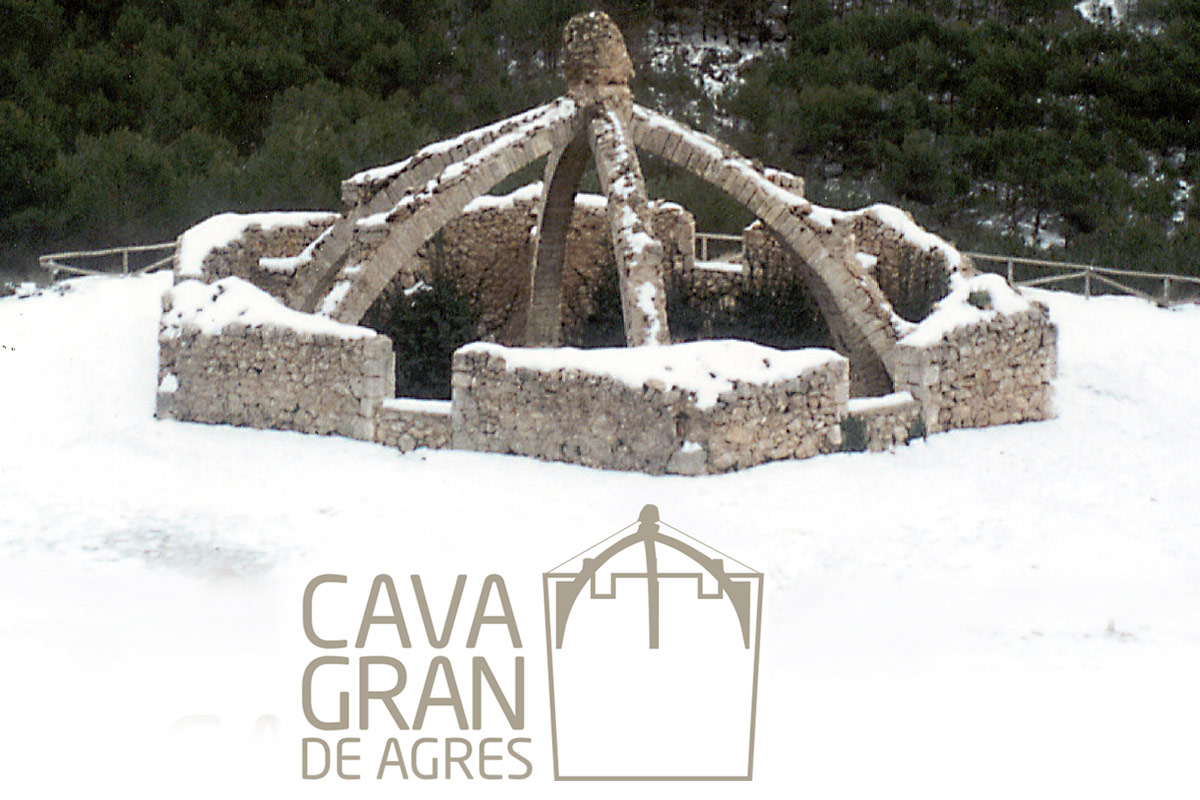
Located in the Serra de Mariola Natural Park, the Cava Gran de Agres is a clear example of industrial architecture that developed during the 17th, 18th and 19th centuries dedicated to the supply of ice in Valencia. Also known as Cava Arquejada, The unique ashlar arcade that supported its roof has, over time, become one of the icons and hallmarks of identity of this natural site in which culture, heritage and landscape are integrated.
Built in the second half of the 18th century, its purpose was to store and maintain snow for the production and marketing of ice, an activity derived from the growing demand for this resource for therapeutic, culinary and food preservation purposes.
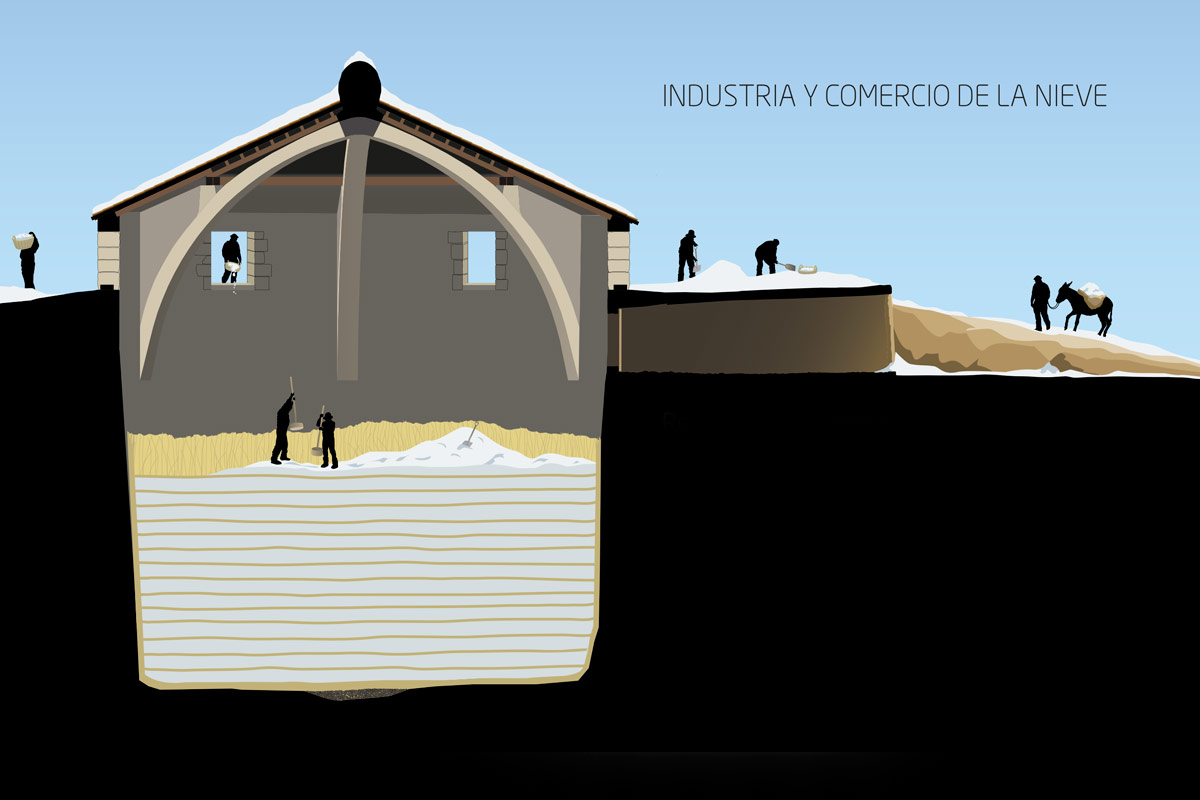
The Cava Gran is a truncated cone-shaped reservoir 17 m deep and 15 m in diameter, with a useful capacity for storing 2,000 m3 of snow. It has a hexagonal floor plan on the outside, with windows on each of its six sides through which the snow was dumped, and the roof structure was built with a pointed ribbed vault made up of six arches (ribs). It has an access gallery to the interior of the shaft through which the ice was extracted.
At the beginning of the 20th century, with the revolution in the ice industry brought about by the production of artificial cold, it was abandoned, its roof dismantled and its subsequent degradation.
Publicly owned since 2008, its recovery and enhancement as a cultural facility has been carried out by the Diputación de Alicante.
Collection and storage
The industrial activity begins in winter, when the snow is collected and stored. This is when the labourers are called to work by means of announcements and collect the snow with baskets that they carry to the well where it is piled up in layers or heaps by means of piles, so that it is compacted and loses volume. Due to the hardness of the work, they did it in shifts, wrapping their feet in sacks to avoid freezing. Once the well was full, the supply doors were closed to insulate and preserve the snow.
Extraction and transport
The extraction work was carried out in the summer and at dusk. The snow, which was very hard and compacted, was sawed and cut into blocks which, hoisted by means of pulleys, were loaded outside in the saddlebags of the horses wrapped in straw and blankets, each load weighing 10 arrobas (about 120 kg). The journey was made at night in order to reach their destination before dawn, thus preventing the ice from melting. The ice was deposited in the snow shops or snow houses where it was sold, and it was obligatory to have it available every day, except for fines or penalties, in some cases heavy ones. The price of the ice was variable, as the summer period was the time of greatest consumption, the prices were higher, partly to compensate for the losses that occurred during transport.
At the beginning of the 20th century, the snow trade came to an end with the appearance of the first artificial ice factories, leading to the abandonment of these industrial structures, which were particularly abundant in our mountain geography.
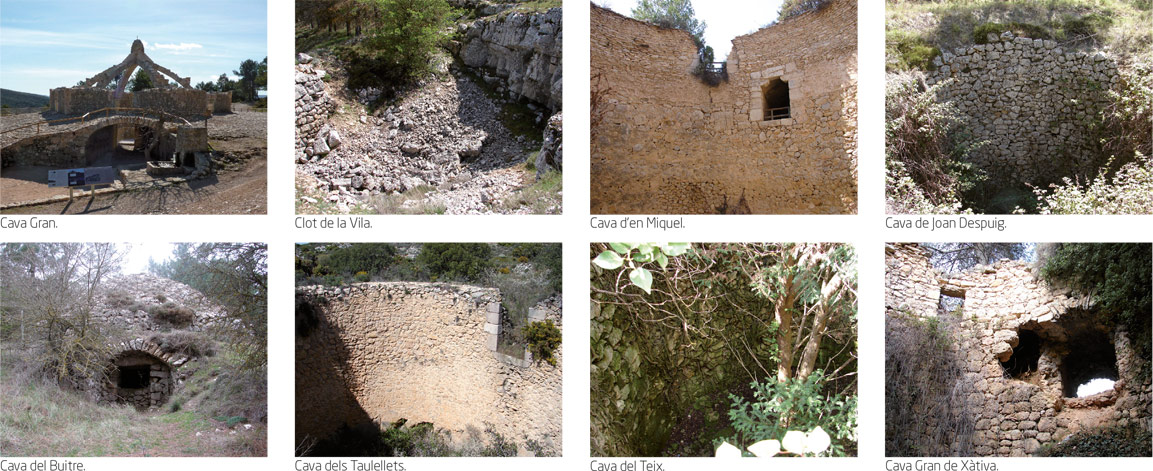
The Cava Gran de Agres, together with the other "pous o caves de neu", or ice cellars, have been recognised as Local Heritage Sites by the Cultural Heritage Law of the Generalitat Valenciana, which means that they are cultural facilities in the Serra de Mariola Natural Park.
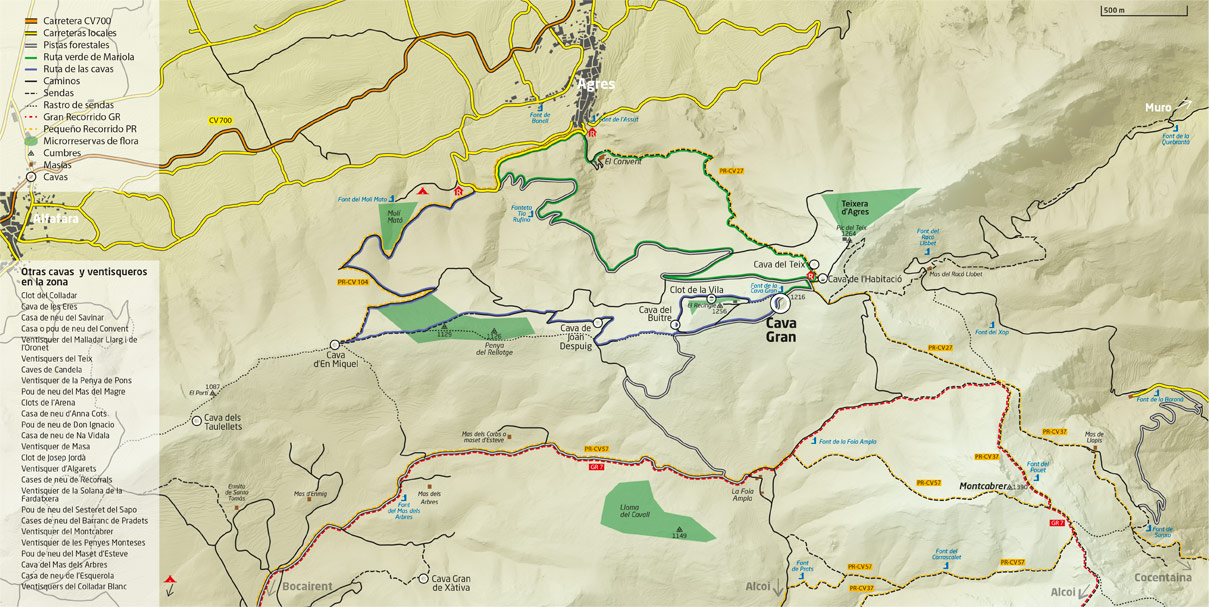
Another attraction in the surroundings of the Parc de la Cava Gran is the Cava Gran.
Natural of the Serra de Mariola, the "Teixera d'Agres". This is one of the most southerly populations of yew trees in Europe, with specimens that are hundreds of years old and others that are around a thousand years old. In the shelter of the architecture of the Cava Arquejada, and at the bottom of the well, there is one of the 14 male specimens of the 57 registered. This special circumstance, together with the unusual sensations you get when descending to the bottom of the old snow pit, adds exceptional value to the visit.
.jpg)