

Figueras Pacheco
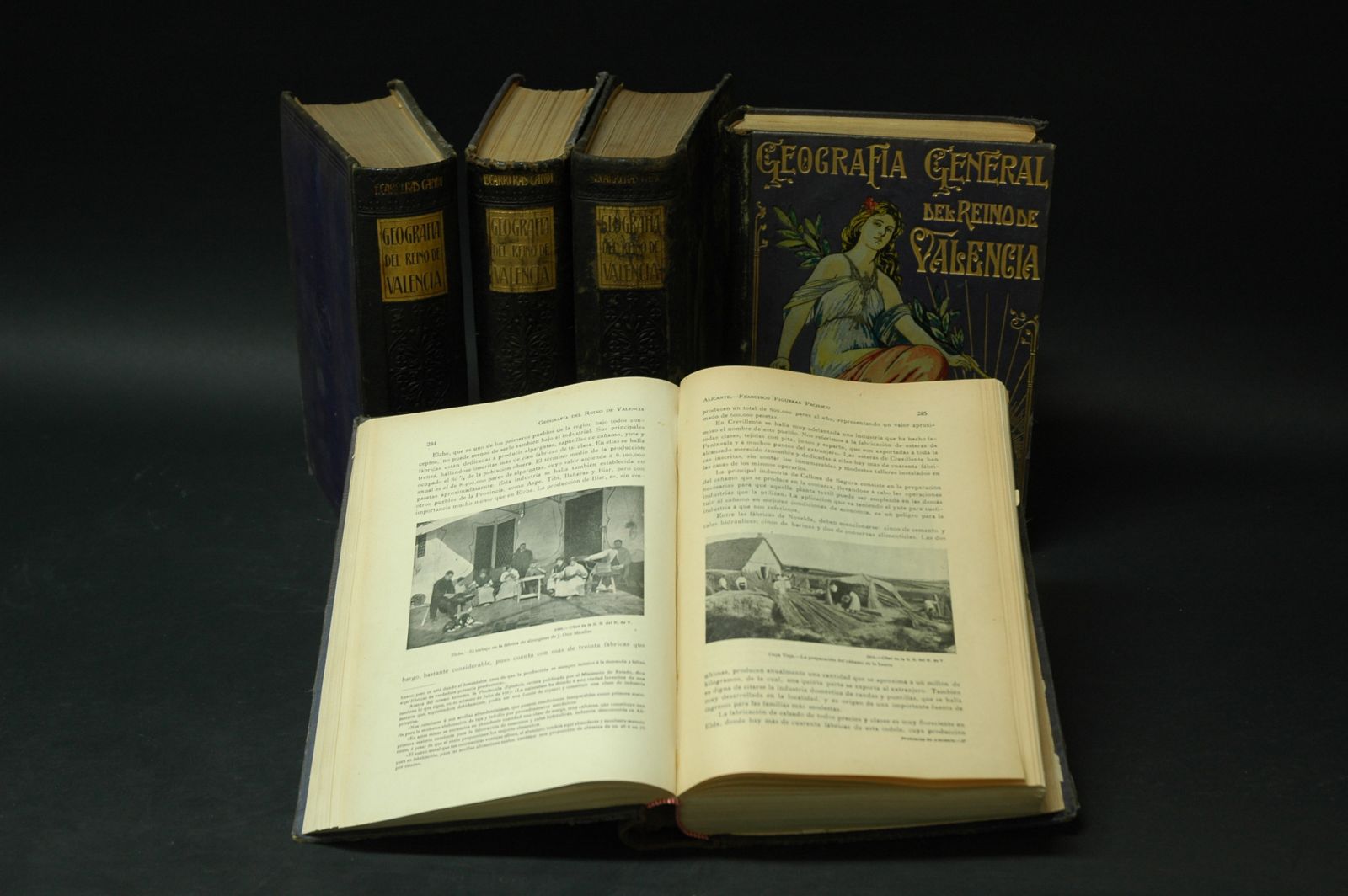
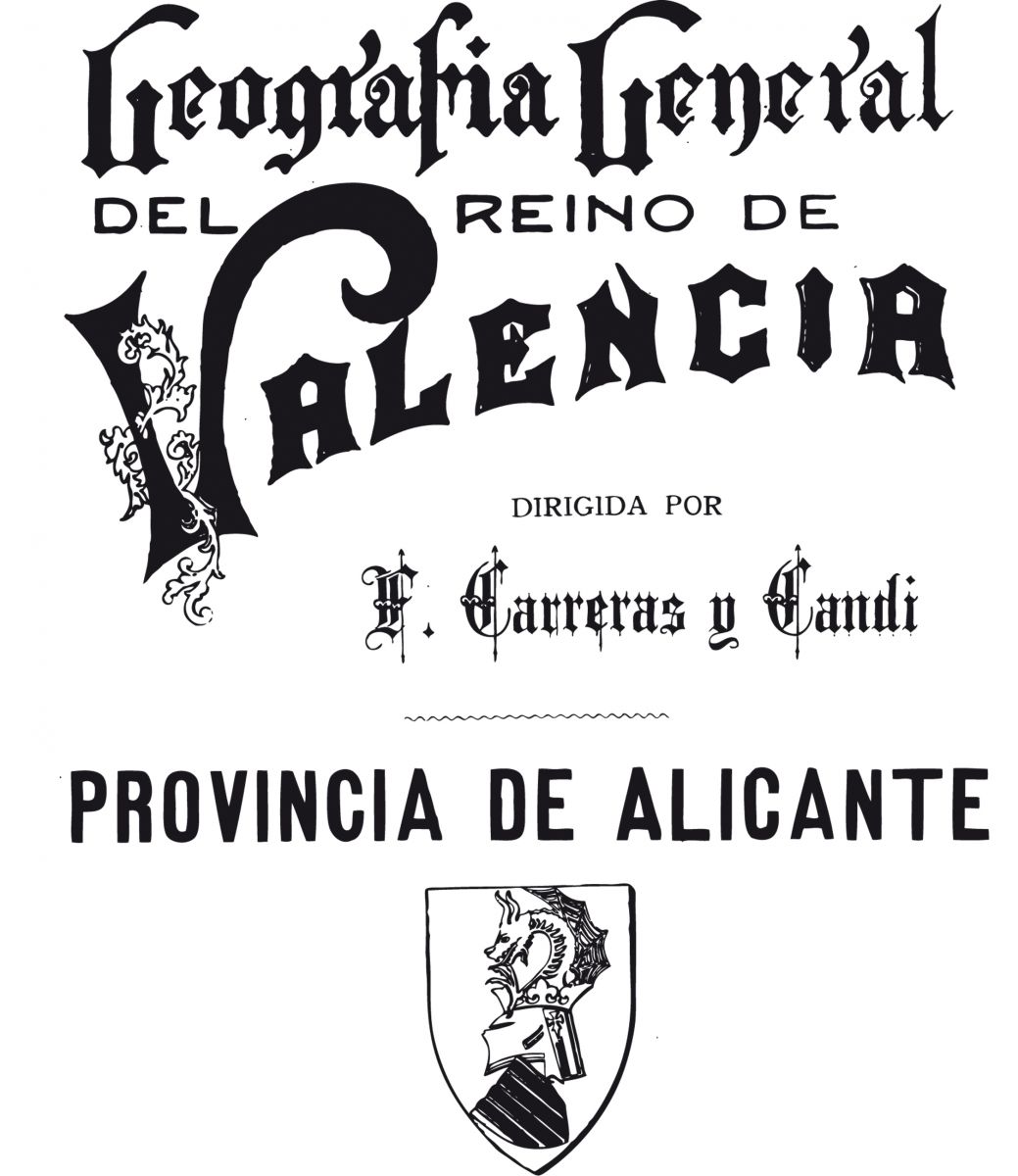
Author: Francisco Figueras Pacheco. Barcelona: Establecimiento Editorial de Alberto Martin, ca. 1919, directed by Francesch Carreras y Candi.
Francisco Figueras Pacheco was born in Alicante on 13 December 1880. His parents were Francisco Figueras Bushell from Granada and Josefa Pacheco Vasallo from Alicante. It was his paternal figure, assistant to the illustrious provincial chronicler, Roque Chabás from Alicante, who encouraged his studies after the premature death of his mother.
.jpg)
Elche
At the age of ten, Figueras entered boarding school at the Colegio de La Inmaculada Concepción in Novelda and a year later he began his secondary education at the Colegio Politécnico de San José in Alicante, where he was influenced by Hermenegildo Giner de los Ríos, who imbued him with the liberal pedagogical spirit of the late 19th century. In 1896, he began his Law studies at the University of Valencia, interrupted by the blindness that befell him at the age of seventeen. He finally graduated in 1907, obtaining his doctorate at the University of Madrid in 1910. Removed from the Chair of Law due to his handicap, he focused his broad intellectual gifts on poetry, literature, theatre and essays, culminating in his transcendental facet as a historian and archaeologist. Official Chronicler of the City of Alicante, corresponding member of the Royal Academy of History, from the Provincial Monuments Commission, he directed the excavations of the Albufereta, the Illeta de El Campello and Xàbia. The illustrious polygrapher, a friend of Oscar Esplá and Gabriel Miró, died on 21 March 1960 in Alicante, the land he loved and of which he had said: "My sanctuary is Spain, but Alicante is on the high altar". His incomparable Geografía de la provincia de Alicante, included in the maximum work of the Geografía General del Reino de Valencia, directed by Francisco Carreras y Candi, was a project of the publishing house Alberto Martín of Barcelona according to the format of the Geografía General de Cataluña. The one on Alicante is accompanied by four volumes on Valencia, two of them on Castellón, and another on the General Geography of the Kingdom. Figueras wrote it between 1912 and 1916, opening up a new horizon which he himself describes: "I then had to leave the battalion of philosophers and jurists who had made me dizzy in previous years to call to my aid another of historians, archaeologists, geologists, etc., so that Aristotle gave way to Pliny, Kant to Hubner and Giner to Vilanova".
.jpg)
Novelda
Always accompanied by his secretary Francisco Prats Nobleza, he made a long journey through the province to document it. In its 1,210 pages, the author delves into its geography, demography, history, archaeology and heritage, ethnography, economy, legal, administrative and military organisation, etc., and describes each of its towns and cities grouped by judicial districts. Full of statistical tables, colour maps and a rich photographic repertoire, it is an excellent reference that the MARQ rescues in this corner of the book, as a milestone vindicating its validity.