
Exhibition at the MARQ Library. The Atlantic Warrior
.png)
In the exhibition The Atlantic Warrior - symbols of power?The MARQ, Archaeological Museum of Alicante and the C.V. MARQ Foundation, in collaboration with the National Museum of Archaeology of Portugal based in Lisbon, offers us the opportunity to contemplate three Portuguese national treasures, the maximum representatives of the famous Castreña Culture, which, over almost a millennium, developed in the northwest of the peninsula, between what is now Galicia, the western part of Asturias and the north of Portugal.
If the MARQ Archaeological Museum of Alicante and the C.V. MARQ Foundation have stood out for anything, it is for their solid commitment to bringing collections and exhibitions of the highest quality and international standing to the city of Alicante. Its collaborations with museums all over the world such as the British Museum in London, the Hermitage in St. Petersburg, the Louvre in Paris, the National Museet in Denmark, the National Museum of Iran and now the National Museum of Archaeology in Portugal are historical milestones that confirm the level of the activities and programmes developed.
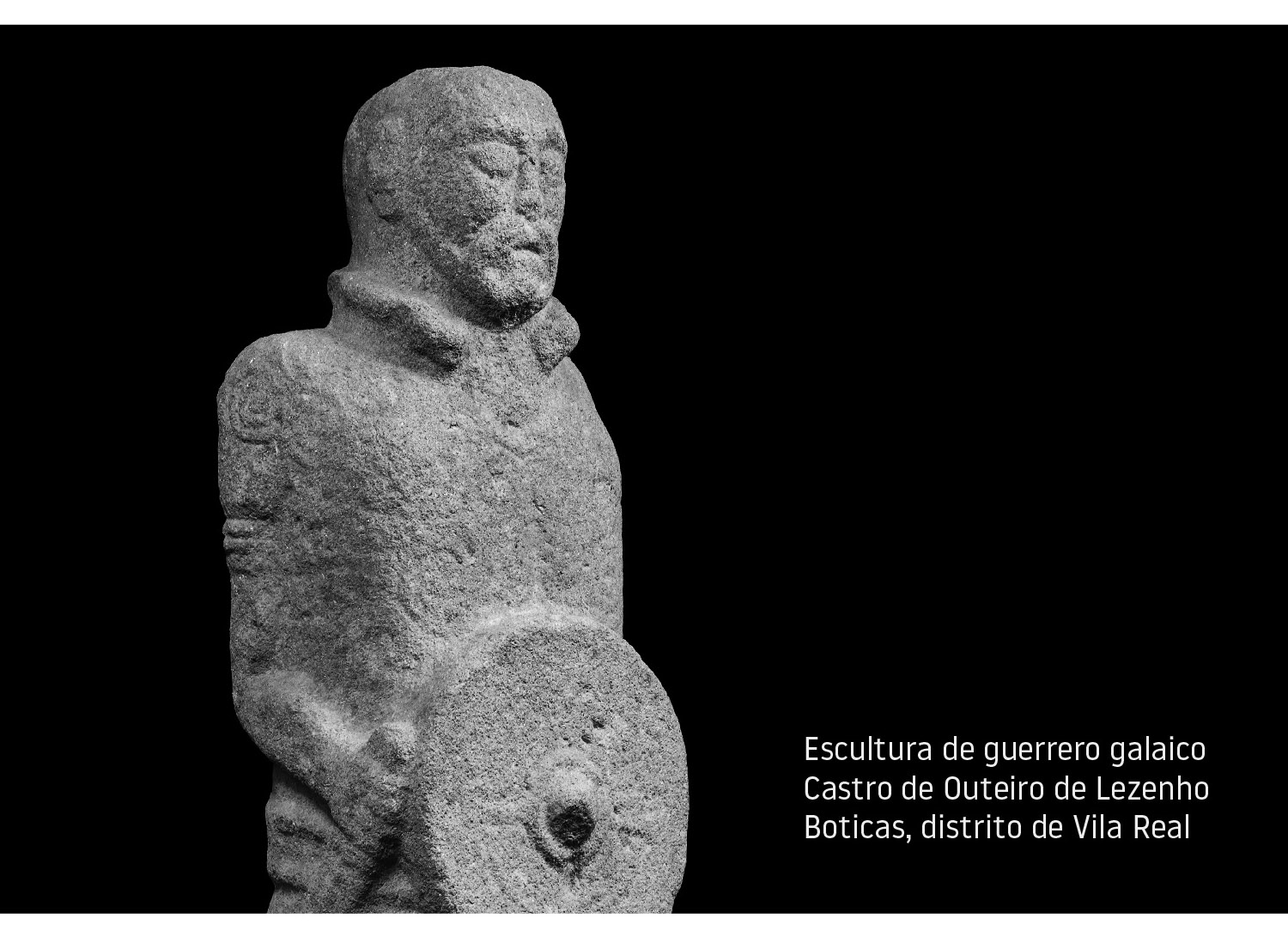
The castreño communities arose at the end of the Bronze Age - between the end of the 9th and the beginning of the 8th century BC - driven by an exceptional boom in metallurgical activity in Europe. However, the Galaic Warriors such as the one currently on display at the MARQ. Museo Arqueológico de Alicante belong to a modern sculptural tradition, close to the 1st century AD, and linked to a strong process of Romanisation of the northwest of the Iberian Peninsula, a time when the castreña culture materialised in a petrification of its settlements and artistic manifestations.
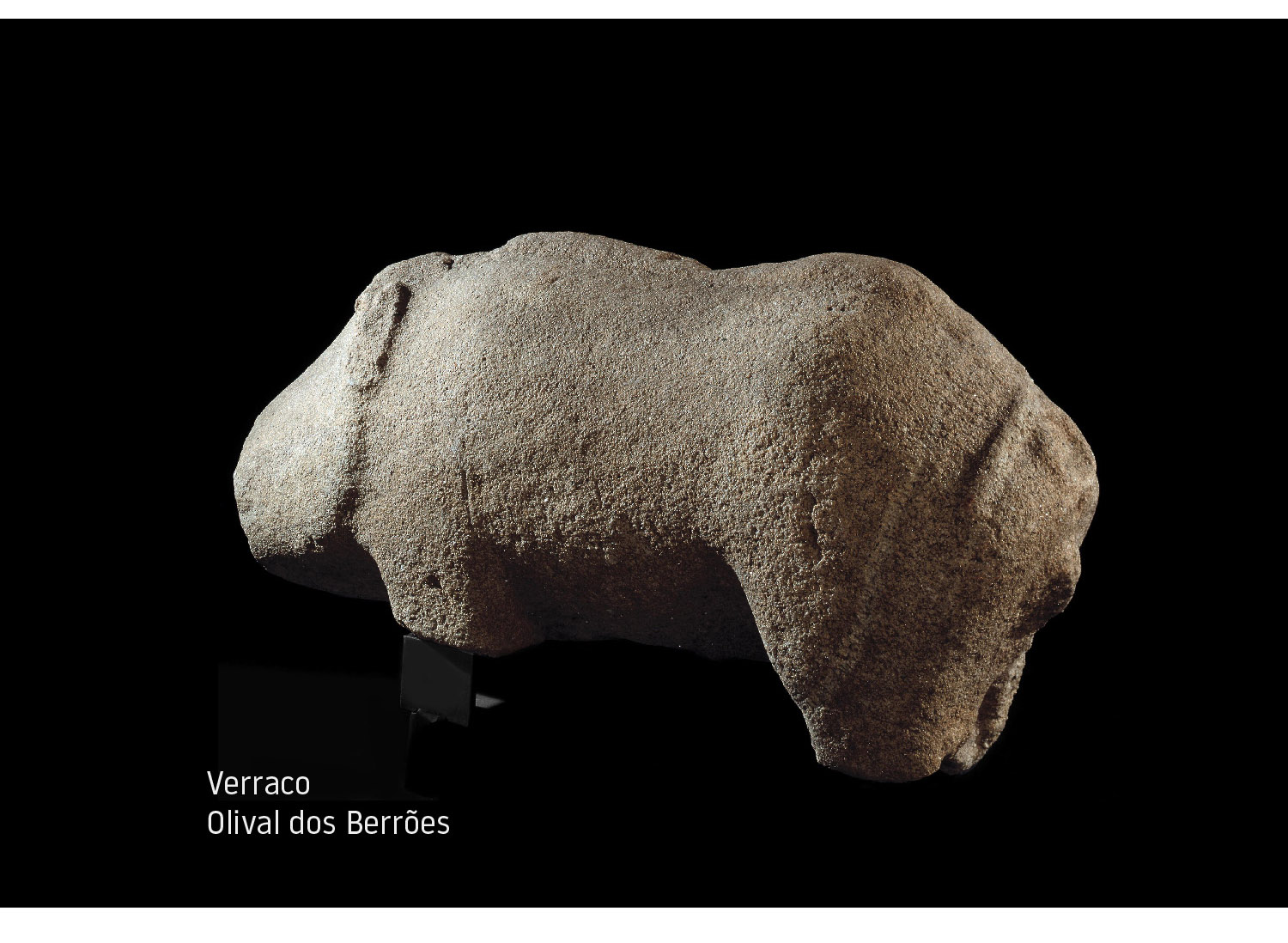
The subsistence economy of Castilian society was predominantly agricultural, complemented by important livestock and hunting activities. The importance of this activity can be seen in the representation in stone, mainly granite, of figures of bulls, pigs and wild boars, generically known as "verracos" (boars).
In the exhibition The Atlantic Warrior - symbols of power? And as part of the archaeological ensemble on display, we can also see a sculpture of a boar sculpted in granite, from a site with the significant name of Olival dos Berrões, in Cabanas de Baixo, Torre de Moncorvo, district of Vila Real, where it was originally accompanied by five others, all representing pigs or wild boars.
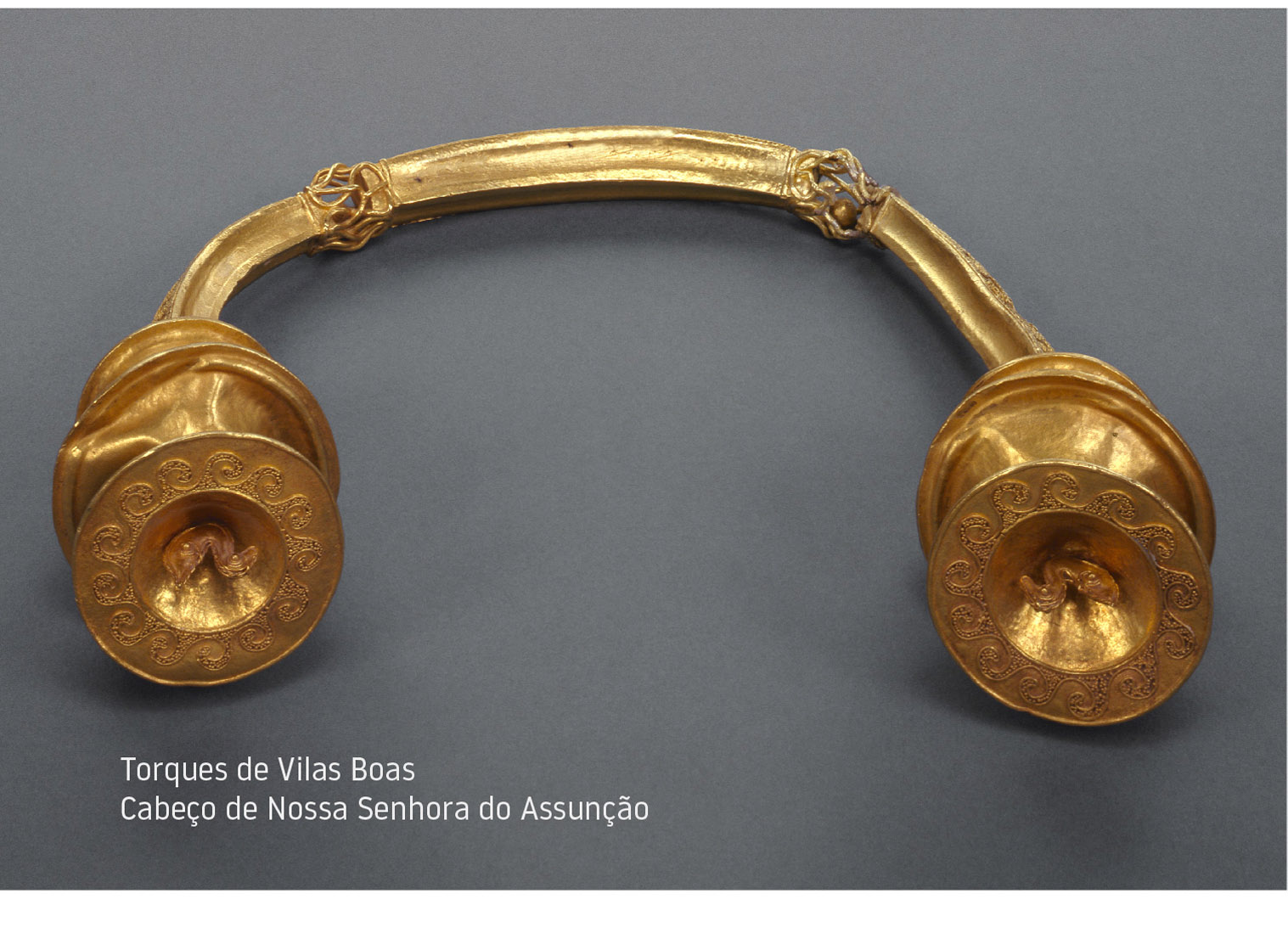
Castro culture was boosted and developed thanks to the intense activity surrounding the extraction of minerals. As a result of this lucrative dynamism, Castilian society developed a social elite that controlled the resources and showed its power and accumulation of wealth with the acquisition of important prestige goods such as wine for banquets, oils and essences, imported ceramics and a wide range of jewellery, including bracelets, arracadas and torques.
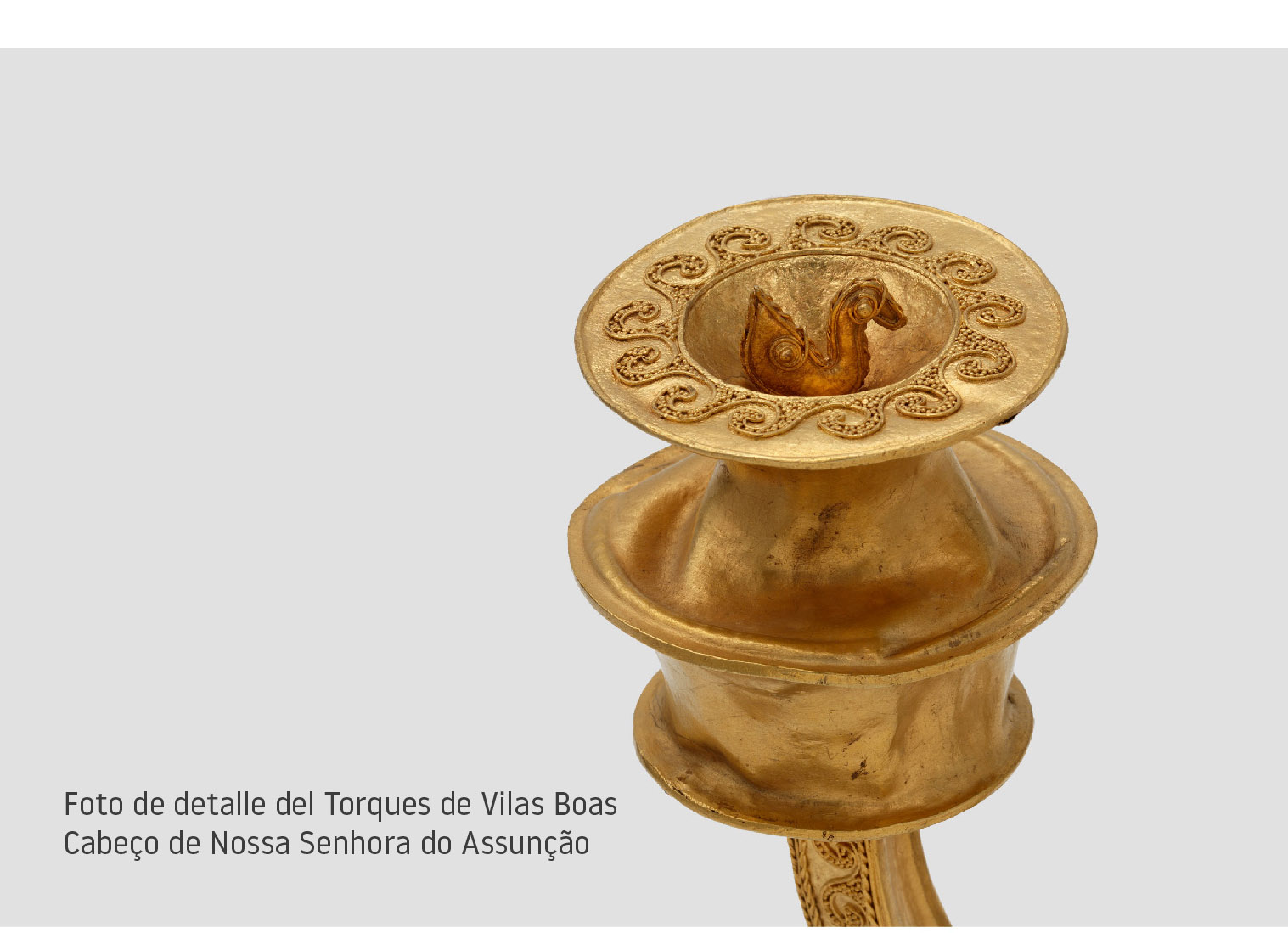
The Vilas Boas Torques, also on display in this exhibition, is one of the pieces with the greatest amount of gold in all of recent prehistory in Europe. It is a unique piece of jewellery similar to a necklace or prestige object that only the elite of the Castro culture possessed. Also known as Torques das Tamancas, it was found in 1965 on the southern slope of the Cabeço de Nossa Senhora do Assunção. Made entirely of gold, it belongs to the type of torques known as the 'double-ended torques', which were widespread in the northwest of the Iberian Peninsula in pre-Roman times. They consist of three parts: a ring or curved rod and two ends, which can be solid or hollow, joined together.