

Temple A
It is a building with octagonal columns at the entrance that give it a monumental character that is very different from the rest of the buildings on the Illeta.
In 1935 Figueras Pacheco excavated the two rooms at the back and the three naves of the central body. Enrique Llobregat finished excavating it in 1981 and interpreted it with a gabled roof, as if it were a classical temple.
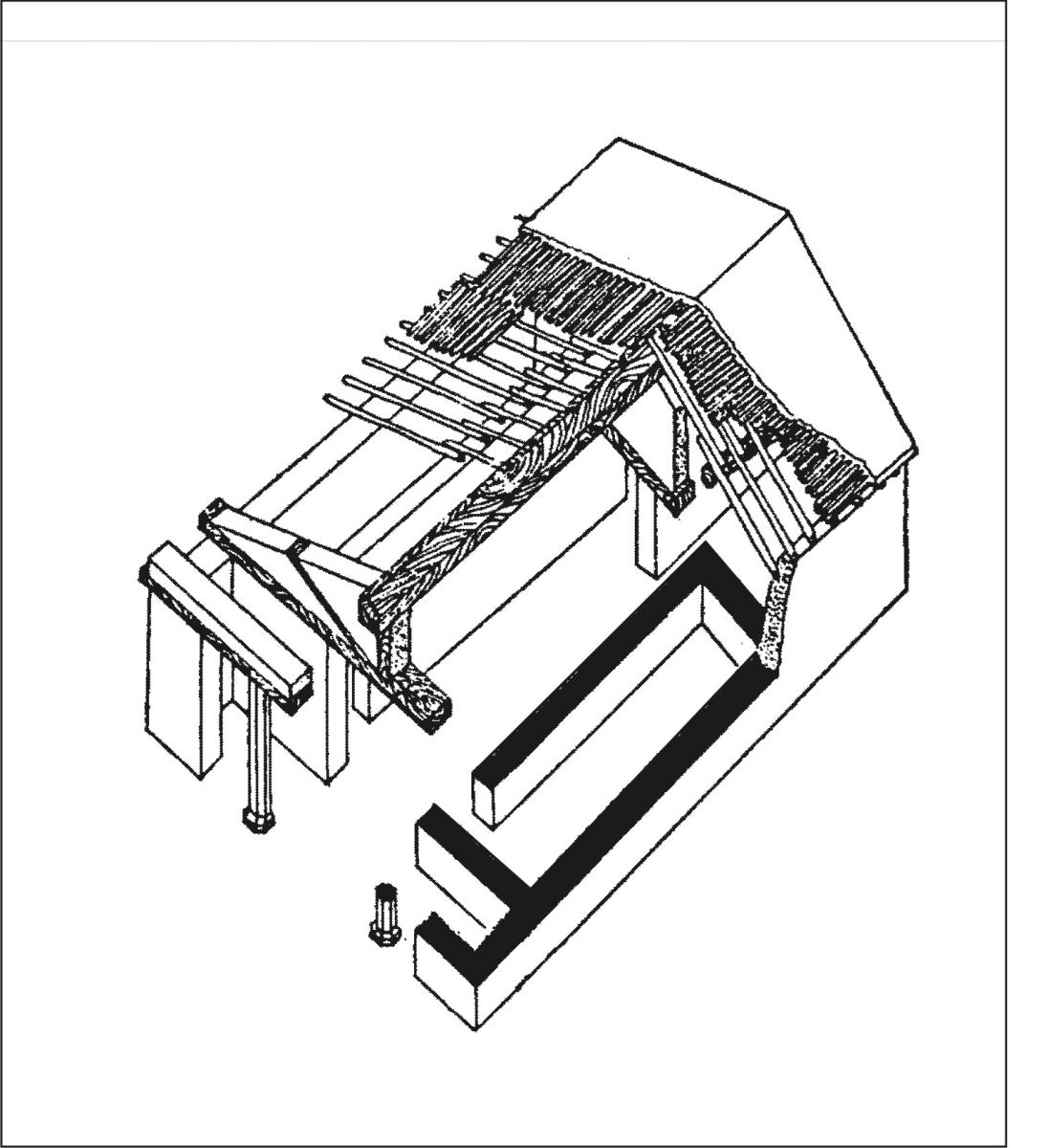
Restitution of the temple A according to E. Llobregat.
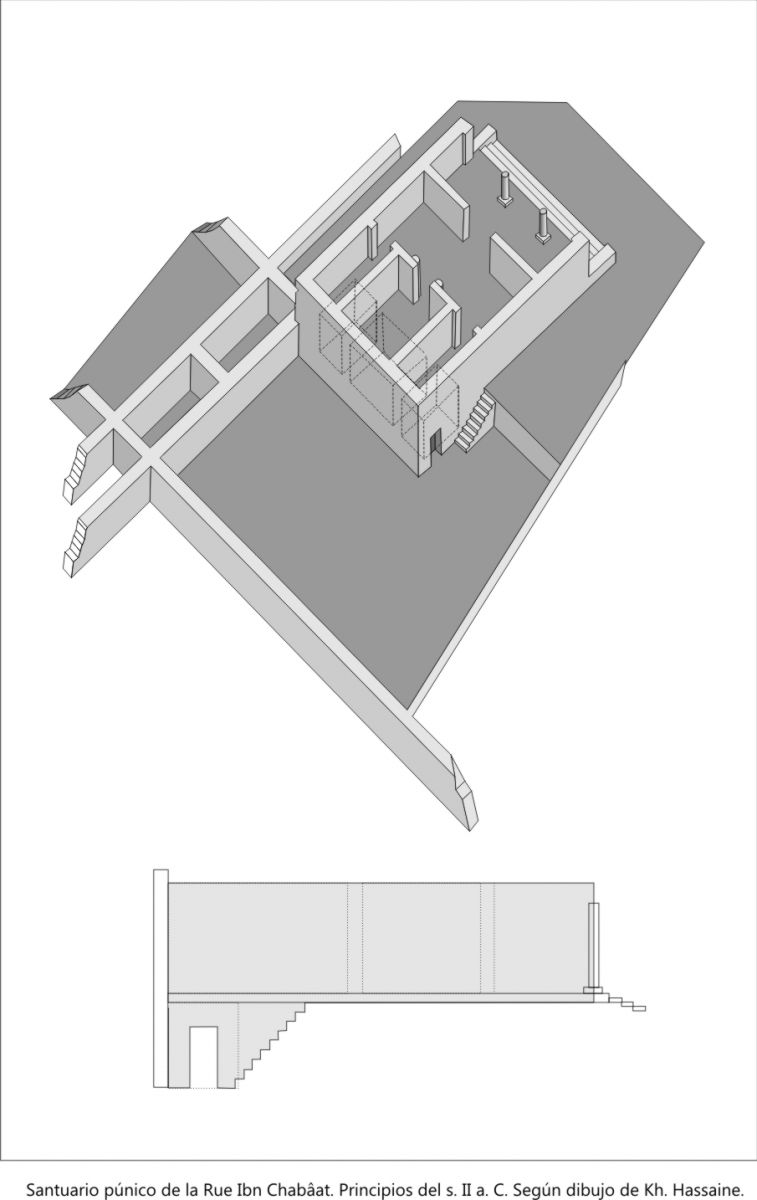
We now know that it has strong influences from the Punic world, where there are parallels of similar architectural plans. In the city of Carthage, the temple of Rue Ibn Chabâat from the 2nd century BC has been documented, which also has a colonnaded portico, three naves, and in this case, the rear rooms are in the basement.
The façade of Temple A could be very similar to those of the temples of the Emar Sanctuary.
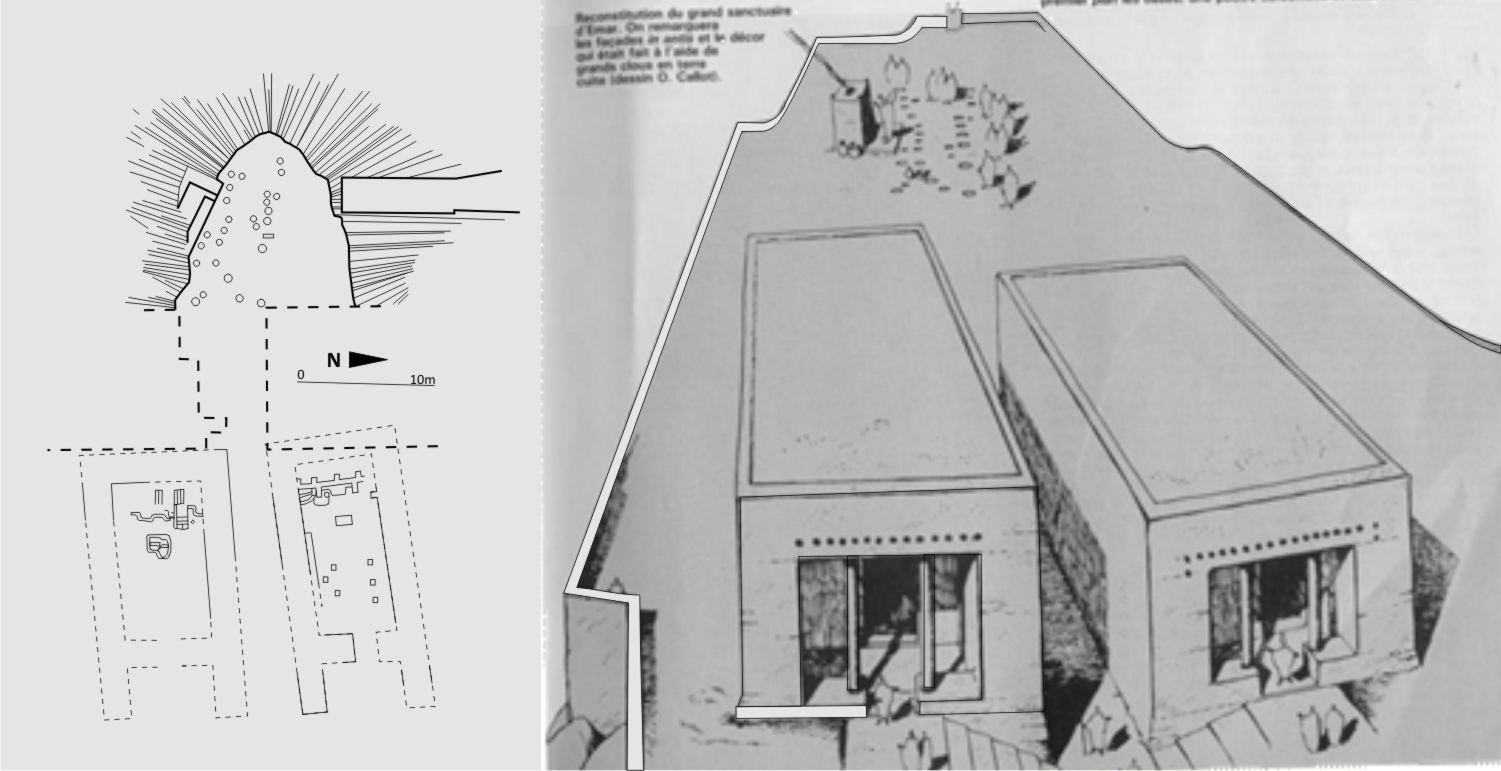
Sanctuary of Emar, according to Olivier Callot.
There have been different versions of the reconstruction of this building.
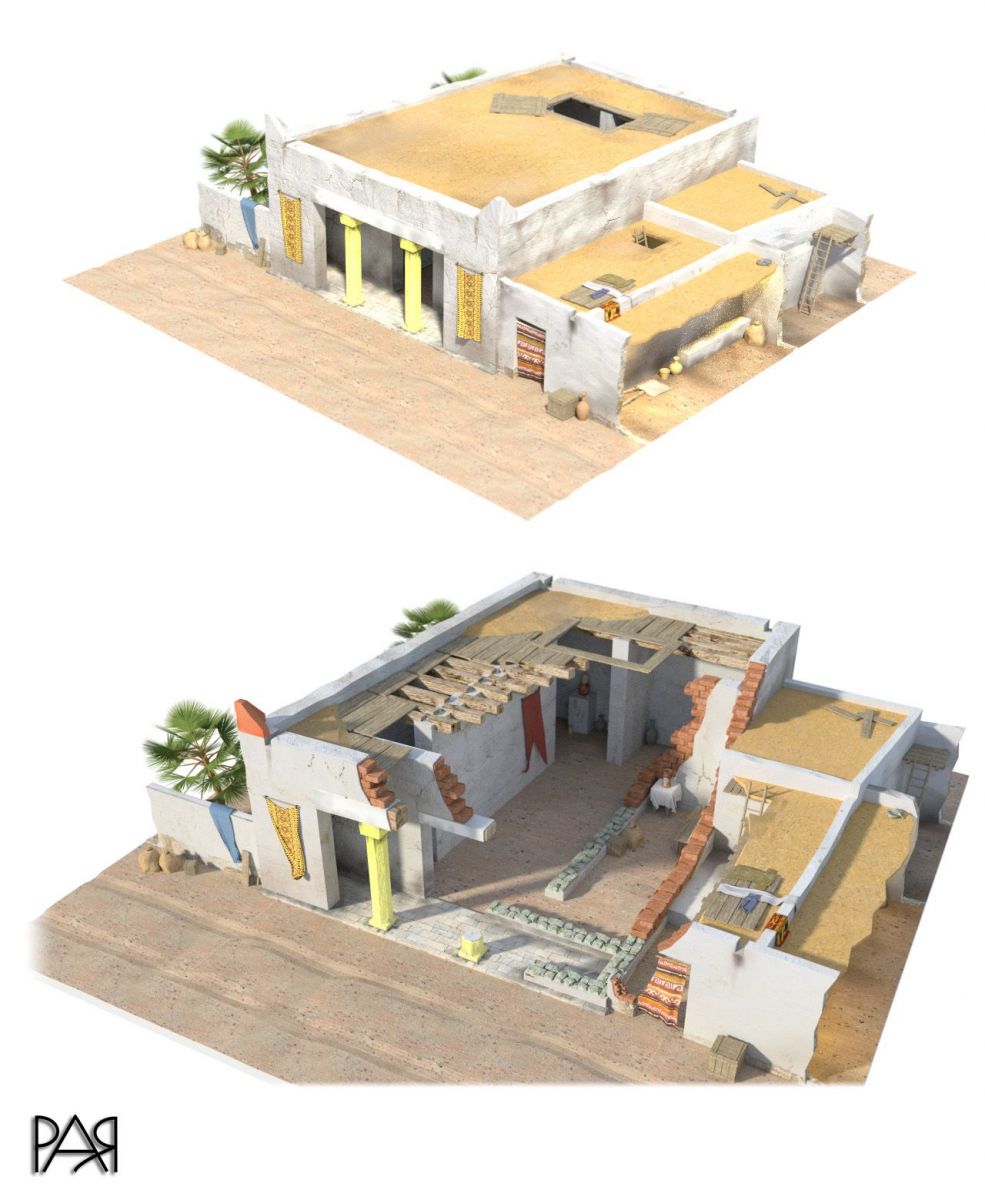
Reconstruction of Temple A according to Pablo Aparicio Resco
Its functionality is reinforced by the materials that have been found in its interior, the fragments of terracotta with a female head.
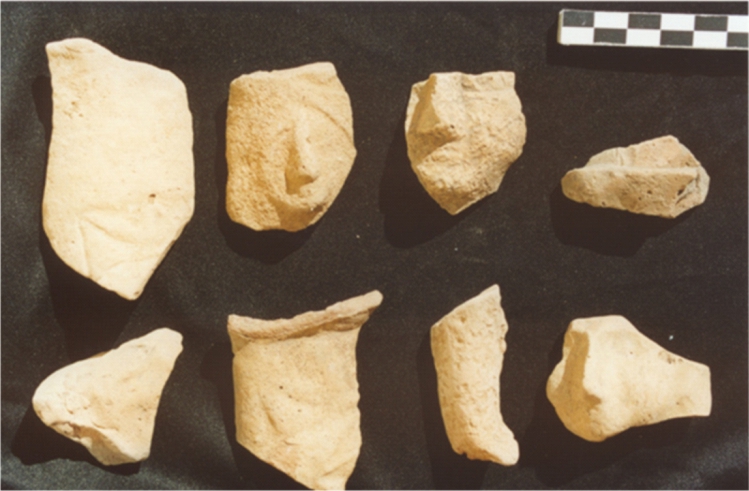
And a fragment of human sculpture.
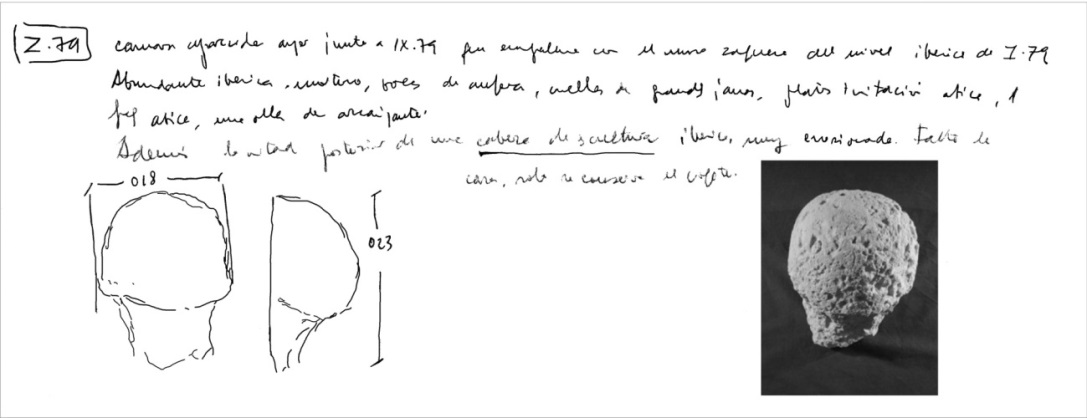
Extract from Enrique Llobregat's diary where the appearance of the human head fragment and a photograph of it are recorded.