
Campaniform
.jpg)
Drents Museum, Assen
Bell-shaped pottery was widely distributed in the lands of Western Europe during the 3rd millennium BC. Its forms and decorations were appreciated by people from different cultures who saw in the bell-shaped vessels an exotic and prestigious element that they soon made their own. In the Iberian Peninsula and the northern lands of the lower reaches of the Rhine River, characteristic vessels were developed which, through the exchange of ideas, reached far from their places of origin.
.jpg)
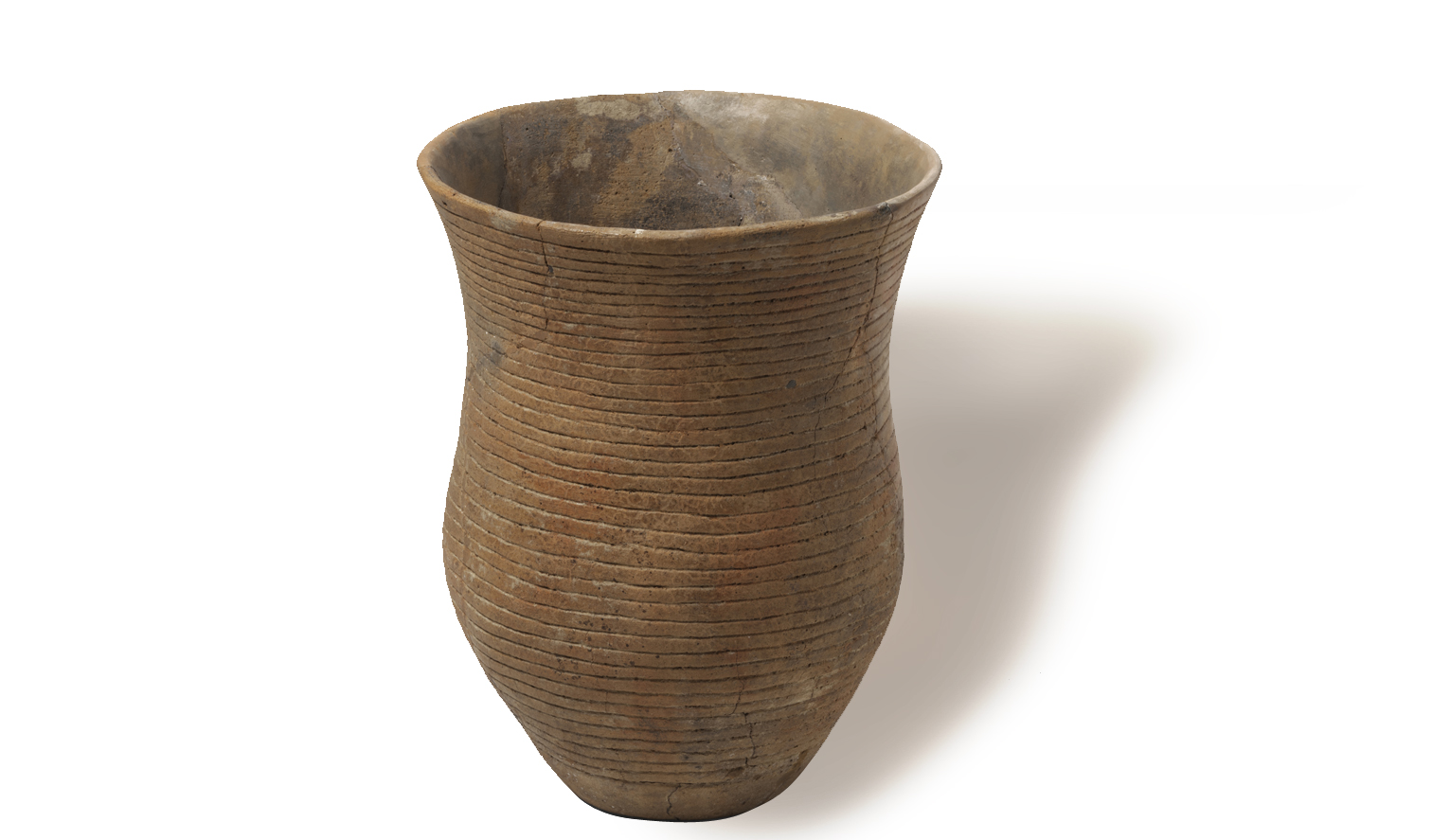
Odoorn vase from the Drents Museum, Assen / Chordate bell-shaped vase. Historisches Museum der Pfalz, Speyer
The vase shown here from Odoorn (Drenthe, Holland) corresponds to a tradition of instrument- or shell-impressed pottery (maritime style), whose origin is located in the Tagus Estuary, while the fragmented vessel from Villa Filomena (Vila-real, Castellón) that accompanies it in the display case corresponds to another of string-impressed pottery (corded style), whose origin could be located in the Netherlands. The exchange of ideas also gave rise to mixed formulas, such as the one that characterises the whole vessel from the site of Vila-real, where the techniques of instrument and string printing coexist (mixed style).
.jpg)
Gold beads from Odoorn. Drents Museum, Assen
The Odoorn bell-shaped vase was found in a burial tomb that did not contain any skeletal remains. The presence of this decorated vessel, surely highly prized for its exotic character, accompanied by gold and amber beads and a bronze dagger and earring, testifies to the social importance of the person buried there. Similarly, the Villa Filomena vessels would have accompanied the remains of a socially prominent person buried in a tomb within a settlement in the second half of the 3rd millennium BC.
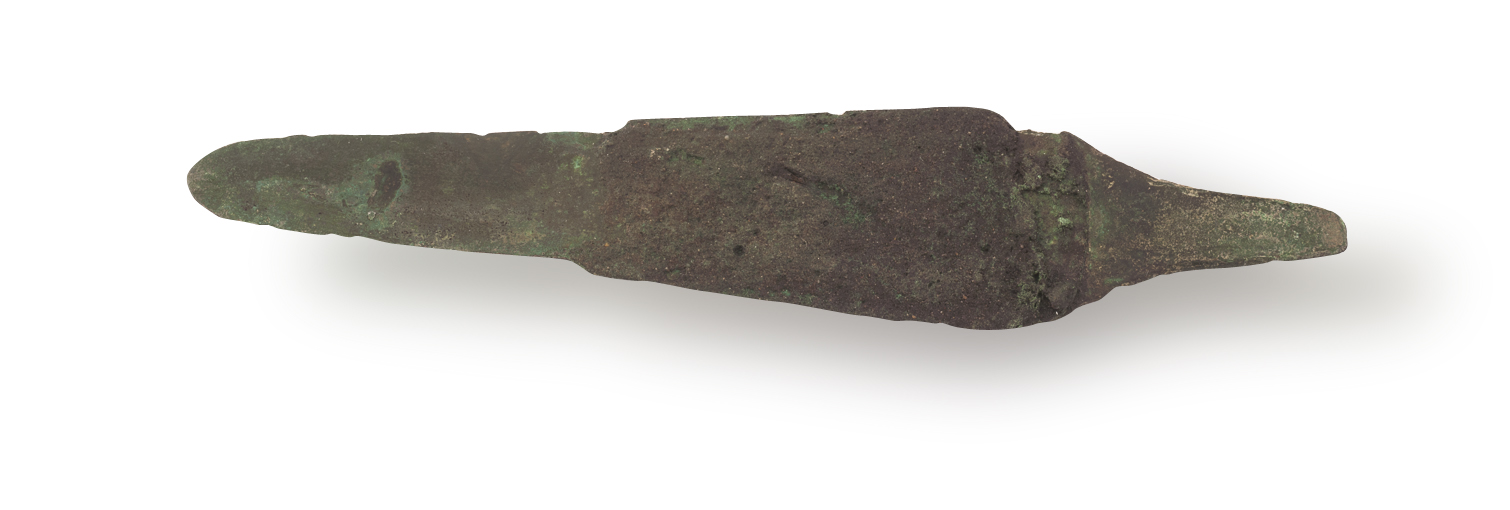
Bronze dagger from Odoorn. Drents Museum, Assen
This exhibition at the MARQ has been made possible thanks to the collaboration between museums, with the display of ceramics from different origins symbolising the close ties that the Archaeological Museum of Alicante has with the Museum of Fine Arts of Castellón and, thanks to the European Exhibition Network (EEN), with the Drents Museum in Assen.
.jpg)